Tyrannochromis nigriventer
Tyrannochromis nigriventer was officially described in 1989 by Eccles. This species was wrongfully described long before this name as Haplochromis polyodon and Haplochromis macrostoma. The name Tyrannochromis consists of two Latin words: Tyran means Tiran and Chromis means fish. Nigriventer means Black Belly.
Description
With a total length of about 35 centimeters, Tyrannochromis nigriventer is one of the largest predators in Lake Malawi, hence the name Tyrant. Females grow a lot smaller and are up to about 26 centimeters.
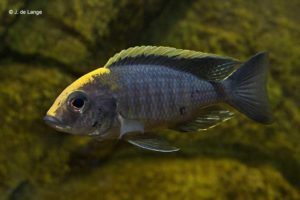
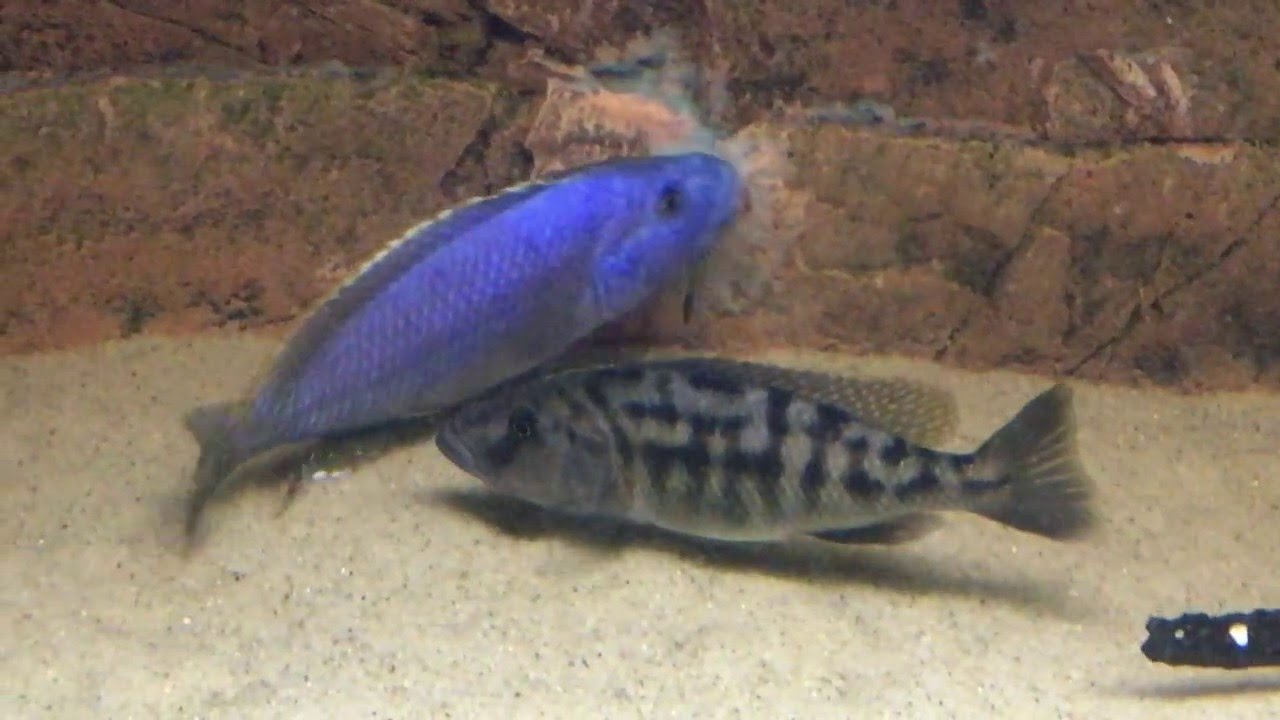
Females and juvenile males have a silver / brown color. Halfway through their sides, they have a dark horizontal line, a second one runs parallel to the first just below the top of their back, and this one is less pronounced. Depending on their mood, the dark vertical lines become more or less visible. The species from the North of the lake have more pronounced vertical stripes than those originating from the south.
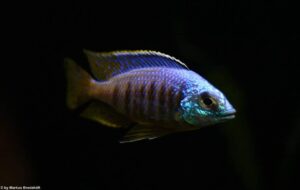
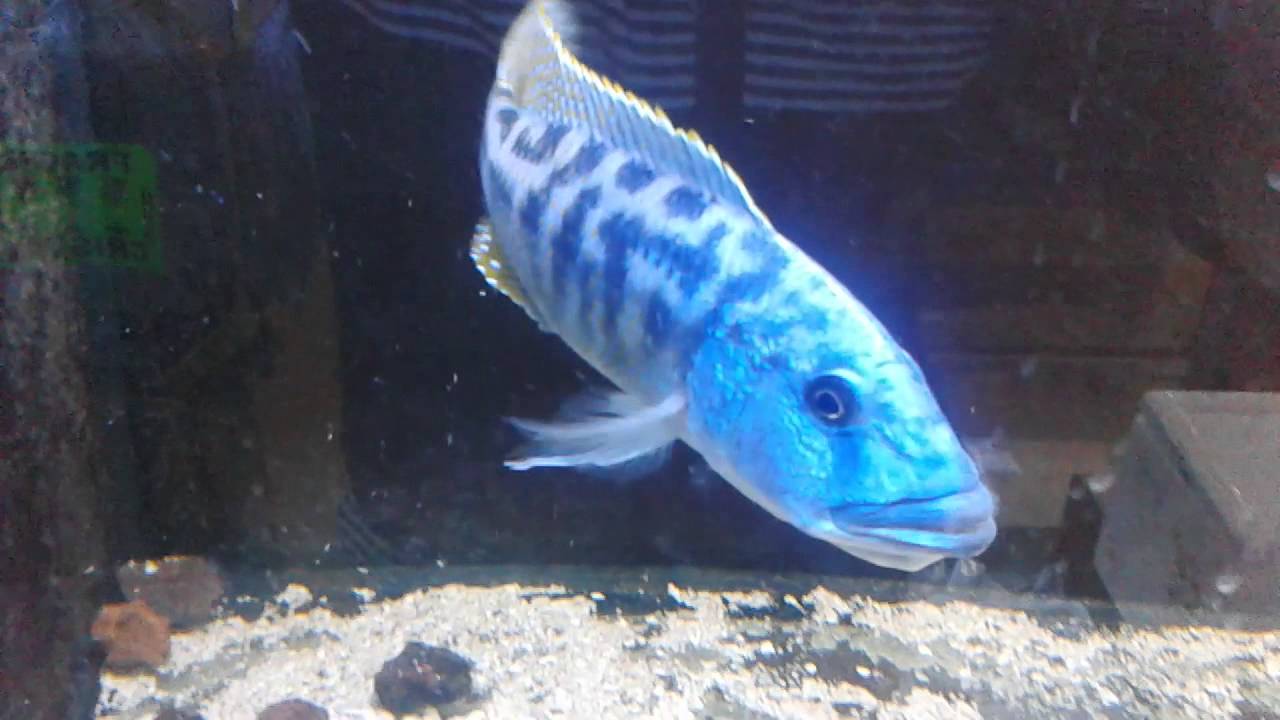
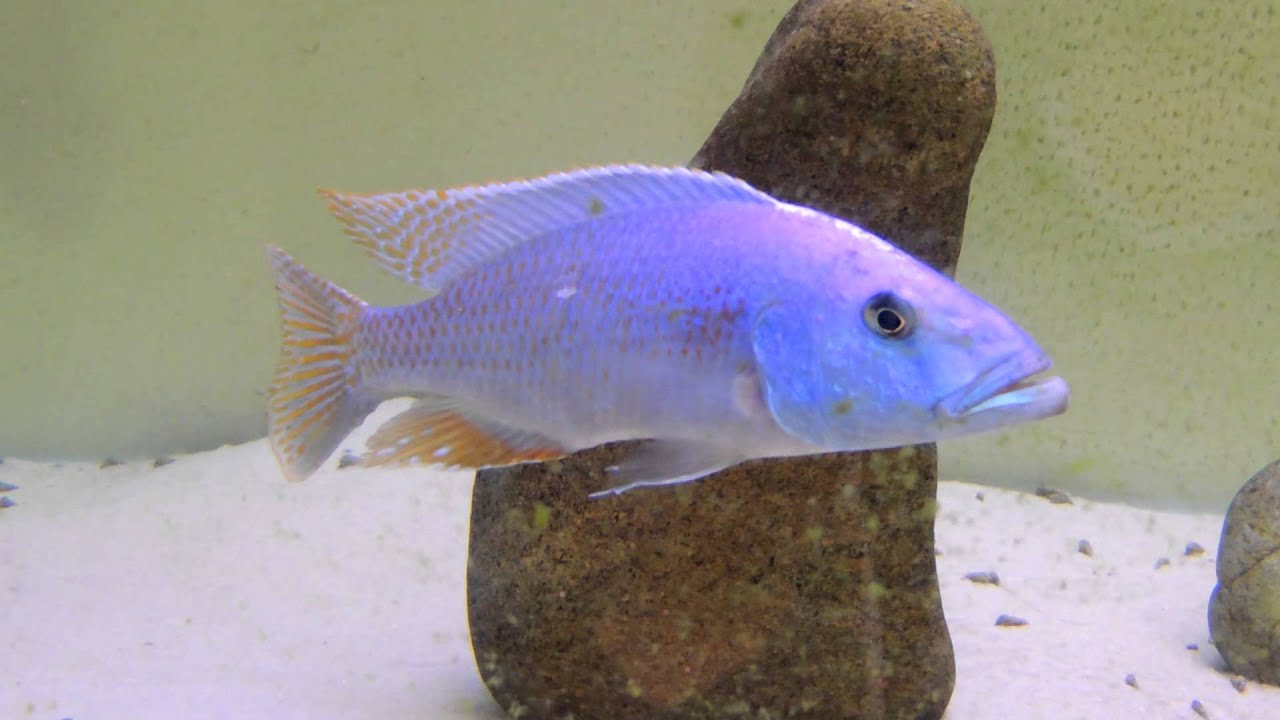
Males turn blue when they mature. The scales on their flanks are trimmed with a red edge, the same color is also present on the anal, dorsal, and caudal fins. Throughout Lake Malawi, a couple of color variants can be found.
The behavior of the Tyrannochromis nigriventer is fairly aggressive, it is, therefore, a hunter that can only be kept together with other large Malawi cichlids that also have a strong character. Especially in the mating season, they defend their spawning place very fiercely. Outside the periods when it wants to spawn, it is a fairly quiet species. A harem is usually kept in the aquarium, so one male with two or more females. In the wild, they always swim alone outside the breeding season.
Tyrannochromis nigriventer looks very similar to Tyranochromis macrostoma. The difference between the two can be seen with some difficulty by the thickening of the head between the eyes and the lip. In the Tyrannochromis nigriventer, this thickening is more in the middle and in the Tyrannochromis macrostoma more towards the eyes. The living environment of these species also differs. The difference between the two can be seen with some difficulty by the thickening of the head between the eyes and the lip. In the Tyrannochromis nigriventer, this thickening is more in the middle and in the Tyrannochromis macrostoma more towards the eyes. The living environment of these species also differs.
Sexing them is easy. Subadult males start to change their color from grey/silver/brown and start to show some hints of blue. Full coloration will take some time and will usually only be seen in full-grown males. Males also have pointed dorsal and anal fins whereas females have more rounded fins.
Biotope
You can find Tyrannochromis nigriventer throughout the entire Lake Malawi. They inhabit the rocky coasts and islands, in particular the sediment-free areas, as opposed to Tyrannochromis macrostoma which inhabits the sediment-rich rocky zones. They live at depths of around 10 to 30 meters.
Diet

Tyrannochromis nigriventer is a real carnivore. In the wild, they slowly swim around rocks until they find their favorite meal: full-grown Mbuna. Once a Mbuna unsuspecting comes around the rock it snaps its large mouth and grabs the Mbuna.
In your aquarium, you can feed them bigger meaty foods like shrimp, mussels, small fish, krill, mysis, smelt, sprat, etc. They will also take industrial aquarium foods like granular, cichlid sticks and flakes.
The Aquarium
It will not be a surprise that this large predator will need a very large aquarium. We advise an aquarium with more than 1.000 liters of water and a minimum length of 250 centimeters, but larger is better. A large part of sandy substrate is not needed for the Tyrannochromis nigriventer just create a spot where they can spawn.
The rest of the aquarium can be decorated with rocks. Give them a couple of large rocks that reach the surface so they can swim around them and sneak up on their prey slowly. Nowadays you can buy artificial rocks that look great and weigh next to nothing. You can put some large rocks in your aquarium without the risk of them falling over. Create some gaps, holes, and crevices that are large enough for females to find some shelter so they can escape from the male’s attention.
As always should the temperature of your Malawi aquarium be between 22 and 26 degrees Celsius, pH between 7.5 and 8.5, and GH between 12 and 16. They are hardy fish that can take some changes in water parameters but it can’t hurt to provide them with the right conditions to keep them healthy. At least make sure to do regular water changes because of their feeding habits, their waste can cause a big load on the water.
BreedingTyrannochromis nigriventer
Like many other Malawi cichlids, Tyrannochromis nigriventer is a mouth-brooder. A male builds a crater nest in the sand against a large rock. This crater nest can reach a diameter of one meter. This crater nest is defended fiercely by the male from intruders, so make sure your aquarium is large enough for the rest of the fish as the male claims a large part of the aquarium if he wants to mate.

As soon as the female is ready, she allows the male to lead her to the center of the crater. While circling each other, the female lays her eggs, which she immediately takes into her mouth. The male circles with her and fertilizes the eggs. The eggs hatch in her mouth after a few days. Only three weeks after mating does the female release the young among the rocks. They search for food themselves here. If danger threatens, the female takes the young back into her mouth. Five to six weeks after mating, the brooding period ends and the young must fend for themselves. They are then about 3.5 centimeters long. A nest can contain up to about 80 young.
Video

Author
John de Lange
Copyright images
Resources
Barschkeller.de
Fishbase.org
Malawifreaks.nl (original website no longer online)
Malawi-Guru.de
nvcweb.nl
wimmels.com