
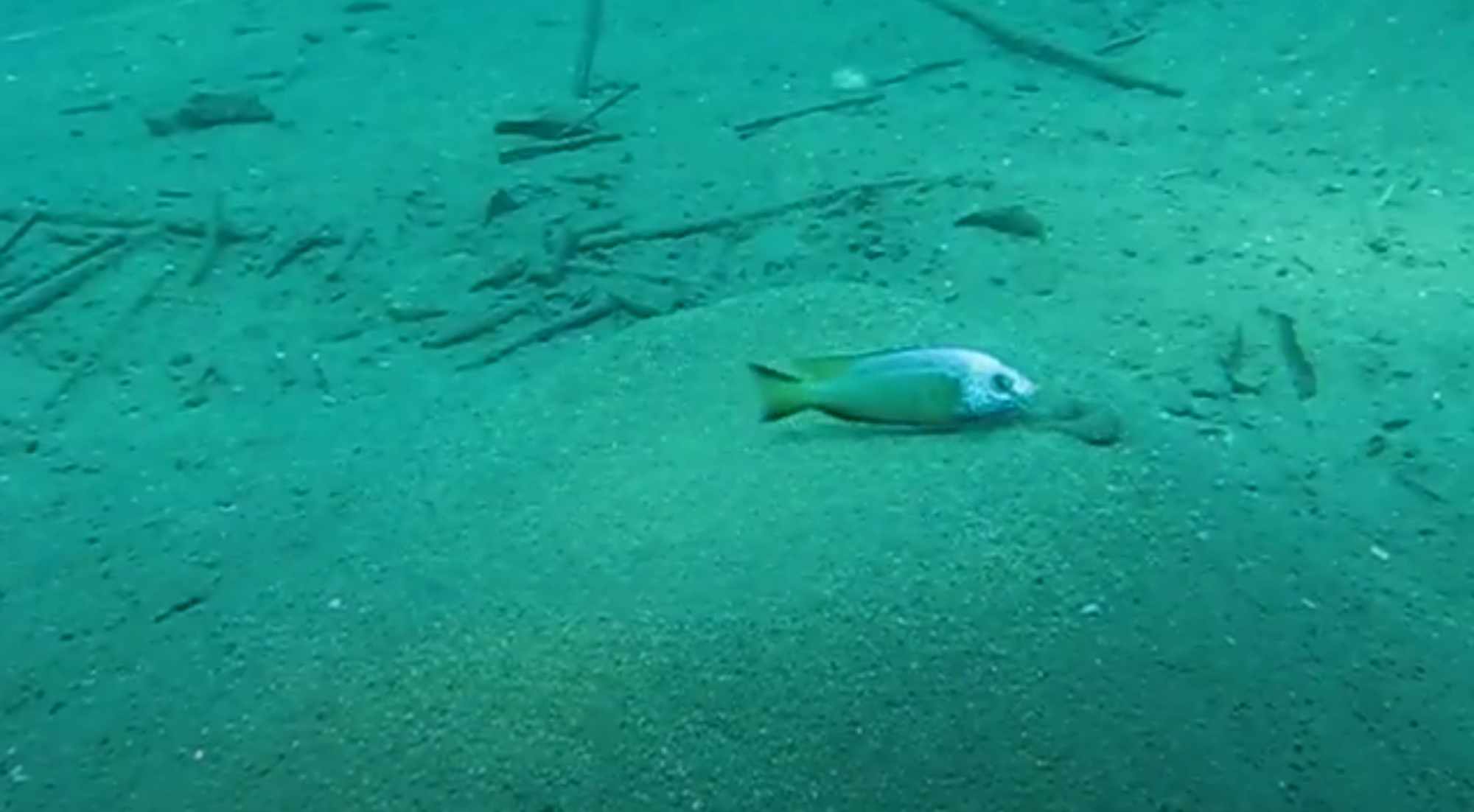
Bowers in Cichlids: Mounds of Sand
In the colorful world of African cichlids, a particular type of behavior stands out: the construction of bowers. This behavior is mainly found in sand-dwelling species from Lake Malawi and, to a lesser extent, in species from Lake Tanganyika. In this article, we explain what a bower is, how it is built, why the behavior is evolutionarily important, and which fish species exhibit this impressive courtship behavior.
What is a bower?
The word bower comes from English and originally means something like “gazebo” or “love nest.” In ornithology, it refers to elaborate structures that certain birds (known as bowerbirds) build to attract females. In aquatics, the word has been adopted to describe the behavior of certain male cichlids that build pits or mounds in the sand to attract females for reproduction.
A bower is therefore a structure in the sandy bottom, dug and shaped by the male as part of its courtship behavior. It serves as a visual lure, a courtship site, and a breeding ground.
In many languages there is no fixed translation, terms such as brood mound, courtship mound or sand nest are sometimes used. In practice, the English term bower remains the most common among aquarium enthusiasts.
How are bowers built?
Building a bower starts with digging a pit, moving the sand with the mouth. Depending on the species, this can result in different shapes:
- A deepened pit with raised edges
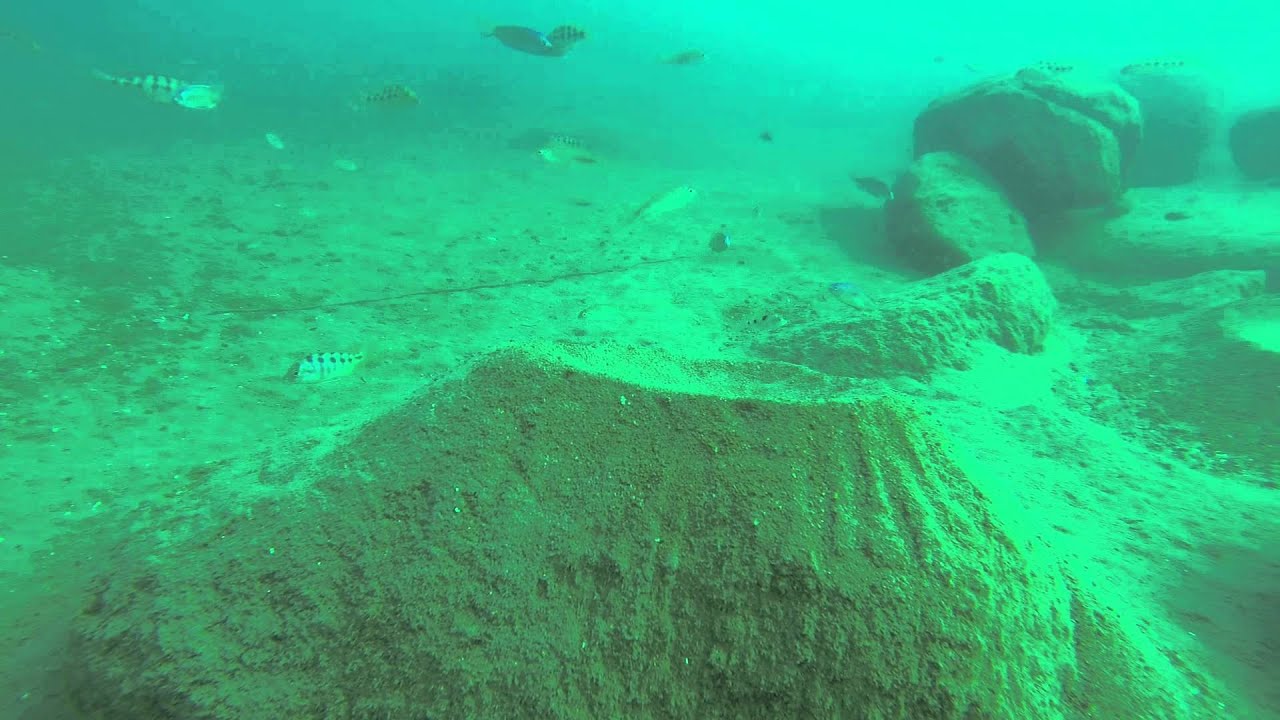
- A sand mound or cone-shaped structure
- A ring-shaped elevation with a courtship spot in the middle
- Combinations of multiple pits in a territory
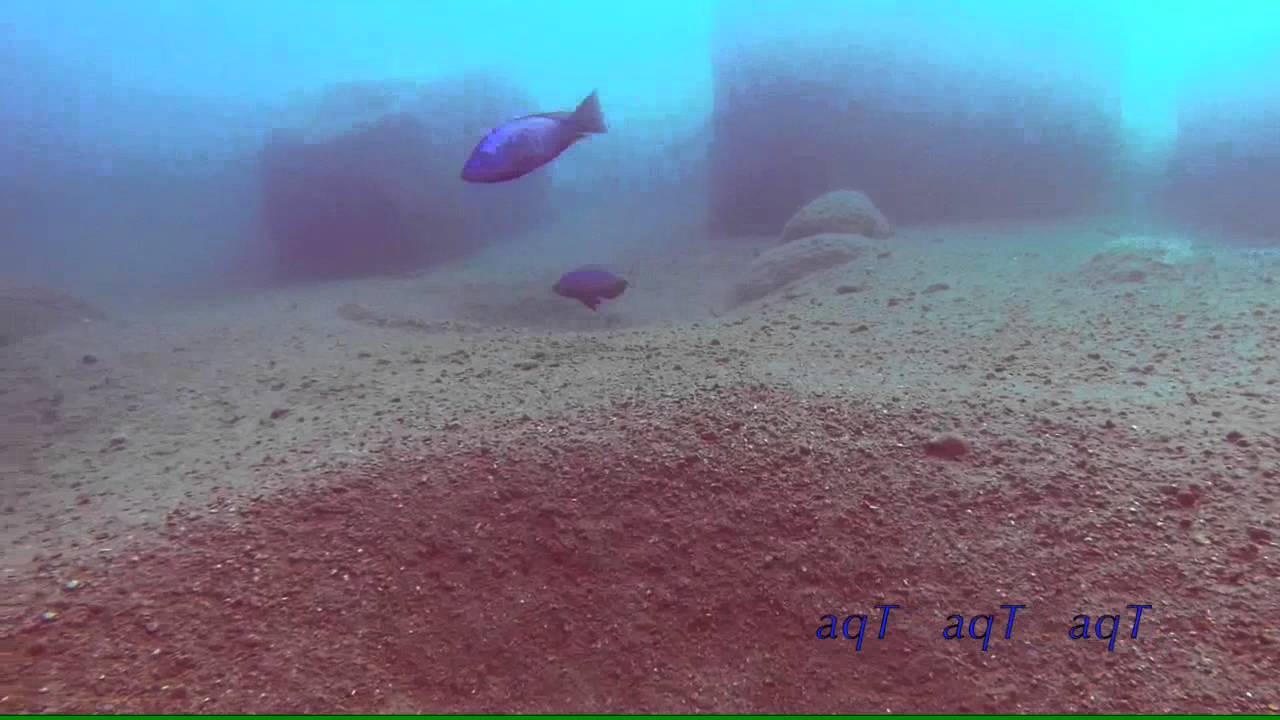
In nature, especially in Lake Malawi, entire ‘leks’ sometimes form, collections of dozens of males, each building and defending their own bower. They try to attract females with their colors, movements, and the size or shape of their bower.
Size of a bower
In the wild, bowers can reach impressive sizes:
- Diameter: up to 1 meter or more
- Height: up to 20 cm
In an aquarium, the bowers are smaller, but males can still be surprisingly active builders. In an aquarium with sufficient sandy bottom and space, a bower can reach a diameter of 20 to 40 centimeters.

Why do cichlids build bowers?
Building bowers is part of sexual selection. Females choose their mates partly on the basis of physical characteristics, but also on the basis of behavior. A well-built, large, or symmetrical bower can be a sign of health, strength, and territorial control.
In addition, the bower provides protection for the female during spawning and creates a safe place to lay the eggs, although most of these species are characterized by mouthbrooding behavior, in which the female takes the eggs into her mouth immediately after laying and fertilization.
Which fish species build bowers?
Cichlids from Lake Malawi
This is where we find the most and most pronounced bower builders. These are mainly sand-dwelling “non-mbuna” cichlids.
Examples of bower-building genera from Lake Malawi:
- Copadichromis
- Mchenga
- Nyassachromis
- Tramitichromis
- Lethrinops
- Otopharynx
- Taeniolethrinops
- Aulonocara (some species)
- Placidochromis (some species)
These species often build pits or mounds in the sand. In some species, the males can be very competitive and actively defend their bowers against other males.
Cichlids from Lake Tanganyika
Although bowers are less common and less pronounced here, some species exhibit similar behavior by building pits or small sand structures.
Examples from Lake Tanganyika:
- Callochromis spp.
- Enantiopus spp.
- Xenotilapia papilio
- Ophthalmotilapia spp.
These structures are often smaller and less conspicuous than in Lake Malawi, but serve the same function in courtship and reproduction.
Practical advice for the aquarium
Would you like to observe the natural behavior of bower builders in your aquarium? Then keep the following in mind:
- A sandy bottom is essential: Use fine sand with a layer thickness of at least 3–5 cm.
- Sufficient bottom surface: Choose an aquarium with a minimum length of 120 cm for species such as Copadichromis or Lethrinops.
- Keep an eye on the male-female ratio: Several females per male will keep the group calm.
- Territorial behavior: Be aware of aggression between males, especially if several bowers are being built at the same time.
- Observe their behavior: Building a bower is often the first sign that a male is in top condition and wants to reproduce.
Finally
Building a bower is one of the most fascinating behaviors you can observe in African cichlids. Not only does it provide insight into their reproductive strategy, but it is also an impressive example of instinctive behavior that is visually and functionally meaningful. Those who keep these fish with respect for their natural behavior will be rewarded with a lively and natural spectacle that never gets boring.
Video
Author
John de Lange
Copyright image
Screenshots from the videos
References
- Lobel, Phillip S. et al – The Behavior, Ecology and Evolution of Cichlid Fishes – Sonic Cichlids
- Long, Lijang et al – Automatic Classification of Cichlid Behaviors Using 3D Convolutional Residual Networks
- York, Ryan et al – Evolution of bower building in Lake Malawi cichlid fish: phylogeny, morphology, and behavior
- Johnson, Zachary V. et al – Automated measurement of long-term bower behaviors in Lake Malawi cichlids using depth sensing and action recognition

Since I bought my first second-hand aquarium when I was twelve, I have always had one or more aquariums. I even converted a garage into a breeding room where I had 50 aquariums containing around 10,000 liters of water. At the moment, I have two aquariums: a 1,250-liter Tanganyika aquarium and a 250-liter community aquarium with plants. For the past 10 years, I have been working on this website as a writer and photographer.


