

Paracheirodon axelrodi – Cardinal Tetra
The Cardinal Tetra, with the scientific name Paracheirodon axelrodi, is a popular aquarium fish known for its striking colors. This species was first described in 1956 by Leonard Peter Schultz.
This fish is also known as the Cardinal Tetra. The fish owes its name to the bright red color on the underside of its body, which is reminiscent of a cardinal’s clothing.
The Cardinal Tetra belongs to the family Acestrorhamphidae. The scientific genus name Paracheirodon can be divided into two parts: “Para” means ‘almost’ or “false,” which means that the fish “resembles” another genus. “Cheirodon” means “pointed pole” and refers to the pointed teeth that are characteristic of this genus. The species name “axelrodi” is a tribute to the author Herbert R. Axelrod.
This species has also had several synonyms, meaning that it has been known by other scientific names in the past. These are Cheirodon axelrodi and Hyphessobrycon cardinalis.
Description
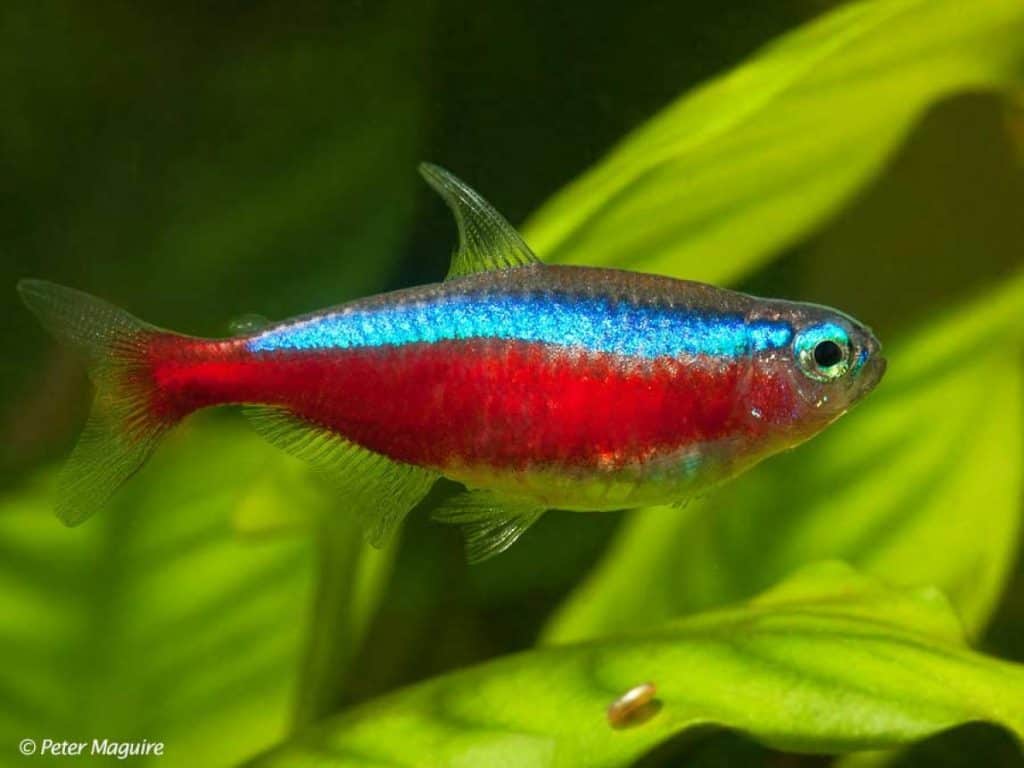
The Cardinal Tetra is a striking presence in the aquarium, especially due to its vibrant colors. These fish grow to an average length of about 4 to 4.5 centimeters (total length including tail), although some females can grow up to 5 centimeters.
Appearance
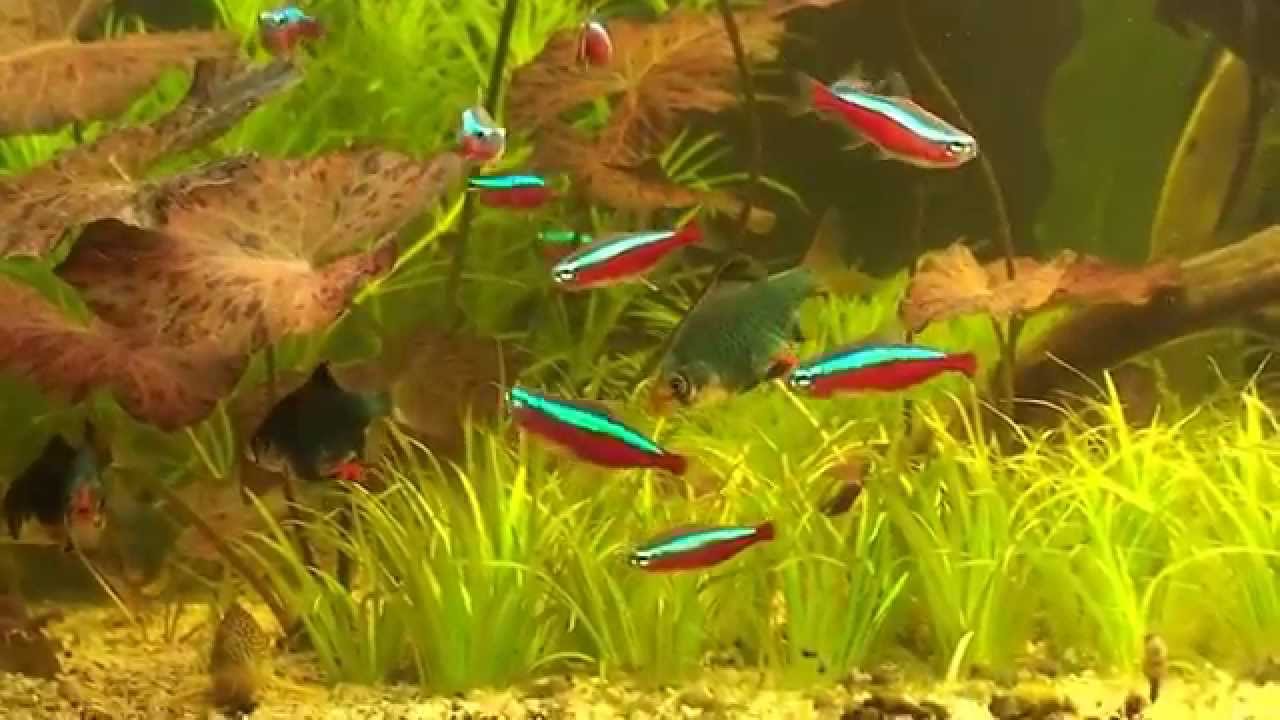
The body of the Cardinal Tetra is elongated and slender. Its most distinctive features are its bright, iridescent blue and red colors. A fluorescent blue horizontal stripe runs along the flank, starting at the mouth and continuing to the tail. Directly below this blue stripe is a bright red band that extends across the underside of the body. The fins are transparent and colorless, while the back and belly have a silvery sheen.
There are subtle color differences between fish from different regions. For example, the form from the Rio Negro often has a straighter and longer blue stripe that extends further, and more red pigment on the belly. The form from the Orinoco usually has less red on the underside of the body and a blue stripe that is slightly shorter and sometimes forms a slight arch, giving these fish a slightly ‘sturdier’ appearance. Sometimes “platinum” or “gold” variants are also found in the wild, with scales that have a metallic sheen. This is caused by a parasite that stimulates the production of guanine in the scales.
The Cardinal Tetra is very similar to its cousin, the Neon Tetra (Paracheirodon innesi). However, the difference can be seen in the amount of red pigment: the Cardinal Tetra has relatively more red on its body and a wider blue stripe that extends further back. The Cardinal Tetra also has a less distinct white marking on its anal fin.
Differences between males and females
It is quite difficult to tell the difference between male and female Cardinal Tetras, as they are very similar. In general, males remain slightly smaller and slimmer than females of the same age. Females often have a slightly rounder belly, especially when carrying eggs, which makes them appear a little plumper. Sometimes the male has a small hook on the anal fin, but this is not always the case.
Behavior and temperament
The Cardinal Tetra is a peaceful and gentle fish, which makes it very suitable for a community aquarium. They are true schooling fish and are best kept in a group of at least 8 specimens. The larger the school, the more beautiful their natural behavior is to observe. They mainly form a close-knit school when they feel threatened, for example by larger fish.
They mainly swim in the middle layers of the aquarium, but can in principle be found in all layers of water. They are not territorial and generally do not interfere with other fish, although their small size can make them somewhat shy in the presence of larger tank mates.
Life expectancy
In the wild, the life expectancy of a Cardinal Tetra is relatively short, about 1 year. However, in a well-maintained aquarium, they can live considerably longer, often 5 to 8 years, and sometimes even up to 10 years.

Biotope
Paracheirodon axelrodi has a large natural range in South America. They are found in countries such as Venezuela, Colombia, and Brazil. Specific river systems where they can be found are the Rio Negro, Rio Orinoco, Rio Vaupés, and Rio Aturia, including their tributaries.
Type of water and habitat
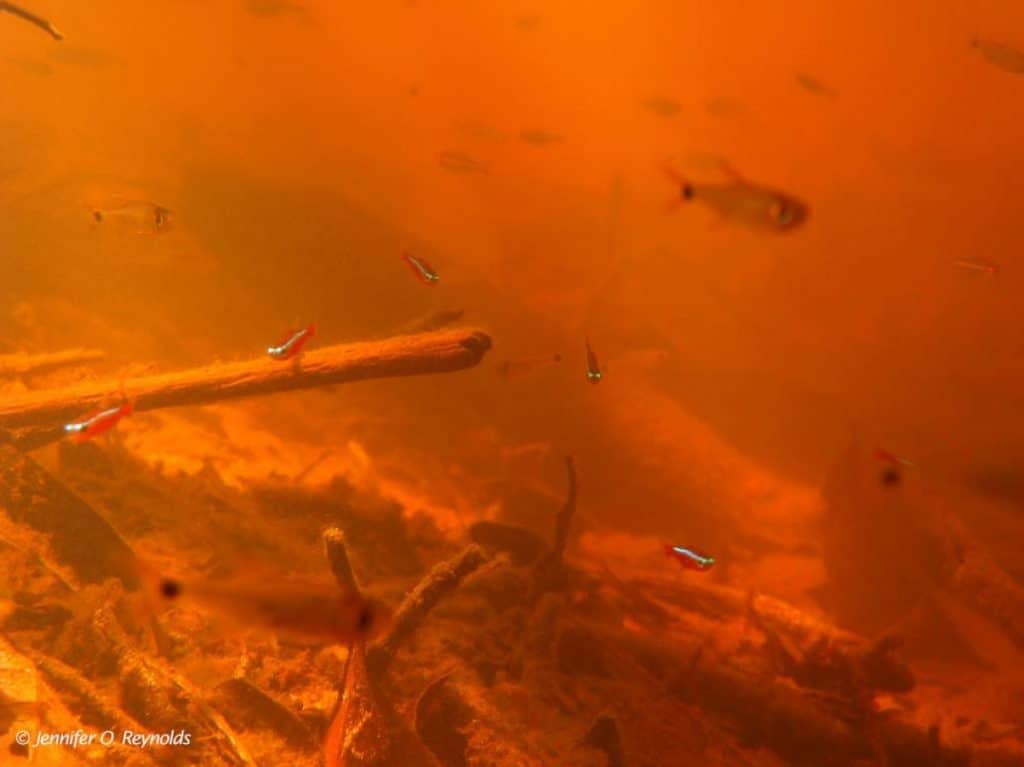
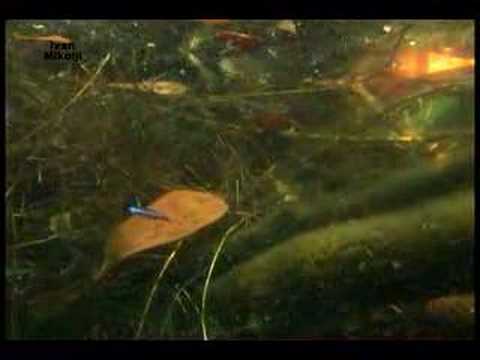
These fish live mainly in small, shady streams with clear water or in so-called blackwater rivers. Blackwater is water that is rich in tannins and humic substances from decaying leaves and wood, giving it a tea-like color and often making it acidic with low conductivity. They are found in flooded forests, in shallow, shaded areas with little current. In these environments, they typically inhabit the middle part of the water, often in large schools.
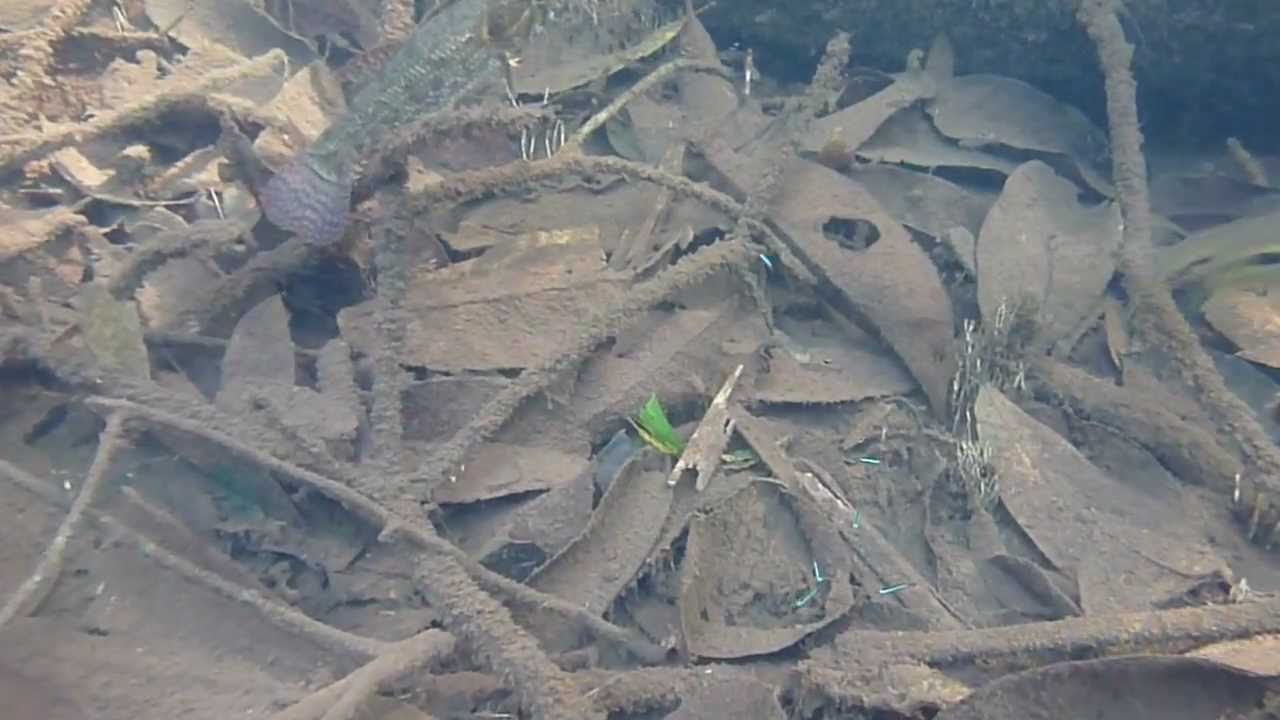
The natural habitat of the Cardinal Tetra is characterized by an abundance of submerged vegetation, branches, leaves, and roots, which provide shelter and a dark environment. The bottom often consists of sand or mud, covered with a layer of leaf litter.
Climate
The areas where the Cardinal Tetra lives, such as the Amazon basins, have a tropical climate with distinct rainy and dry seasons. The Cardinal Tetra lays its eggs mainly during the rainy season. Manipulation of water level (through artificial rain), pH, and electrical conductivity has been shown to promote spawning of the Cardinal Tetra in laboratory conditions, suggesting that these factors also play a role in reproduction in the wild, possibly through seasonal changes in water level and composition.
Diet
The Cardinal Tetra is an omnivore, which means it eats both plant and animal food. However, in nature, their diet is mainly focused on animal foo
Food in the wild
In their natural habitat, Cardinal Tetras are primarily predators. They feed on small animals, also known as mesofauna, that attach themselves to submerged leaf litter, roots, and aquatic plants. Their diet consists mainly of small invertebrates, eggs, small insects such as ants and mites, larvae (including chironomid larvae), and even small young fish. They eat pretty much anything that moves and is small enough to catch. Microcrustaceans and mosquito larvae are the most common prey they eat. They also consume small amounts of algae, although this is less common than animal food.
Food in the aquarium
To keep Cardinal Tetras healthy in the aquarium, it is important to offer them a varied diet. A varied menu of flake food is a good basis. This can be supplemented with small live or frozen food, such as Daphnia (water fleas) and freshly hatched Artemia (brine shrimp). This varied diet mimics their natural diet and ensures that they get all the nutrients they need.
The Aquarium
The Cardinal Tetra is one of the most commonly kept fish in community aquariums, and with the right setup and water values, it really comes into its own. They are true shoal formers and feel most comfortable in a group of at least 8 fish. The larger the shoal, the more beautiful and natural their behavior is to observe. For a school of 8 to 10 Cardinal Tetras, an aquarium of at least 60 centimeters in length (approximately 60 liters) is recommended. For larger schools or in combination with other fish, a larger aquarium is always better.
Decorating the Aquarium
The aquarium should be decorated to mimic the natural habitat of the Cardinal Tetra. Subdued lighting is ideal. This can be achieved by using floating plants on the water surface, which filter the light and create shade. Sufficient shelter is important. This can consist of dense planting, driftwood (branches and roots), and rocks. These elements provide the fish with places to retreat and feel safe, just as in their natural habitat where they are among submerged vegetation and leaf litter.
A dark substrate of sand or fine gravel, possibly supplemented with a layer of dried leaves (such as Catappa leaves), mimics the bottom of their natural blackwater biotope. This also helps to slightly acidify the water and release tannins, which contributes to their well-being.
Suitable water parameters
The Cardinal Tetra occurs naturally in soft, acidic water, often with the characteristics of blackwater. It is important to mimic these conditions as closely as possible in the aquarium. The water temperature should be between 23 and 29 degrees Celsius. It is advisable not to keep the fish at the extreme minimum or maximum temperature all the time, as this can shorten their lifespan. A stable temperature around 25-27°C is often ideal.
Black water is quite acidic. A pH value between 4.0 and 6.5 is suitable for this species. The water hardness (dH) may vary between 5 and 12. Cardinal tetras prefer soft water.
This species is sensitive to changes in water composition and water quality. Regular water changes with well-conditioned water are essential. When introducing new fish, it is advisable to use the drip method to allow them to gradually acclimatize to the new water values.
Suitable and unsuitable tankmates
The Cardinal Tetra is a peaceful and gentle fish, making it a good choice for a community aquarium.
Suitable tank mates are other small, peaceful fish that appreciate similar water values. These include other small tetras, dwarf cichlids (such as Apistogramma species), armored catfish, Otocinclus catfish, and small Rasboras. A slightly larger, peaceful species such as a swordtail can even encourage Cardinal Tetras to form a school more quickly, as they will feel safer.
Unsuitable tank mates are large or aggressive fish. Angelfish (Pterophyllum scalare), for example, are predators and will see Cardinal Tetras as food. Fish that are known to bite fins, or fish that are too active, can also cause stress to the shy Cardinal Tetra.
Susceptibility to Diseases
Paracheirodon axelrodi is a popular aquarium fish, but is known to be relatively susceptible to certain diseases and changes in its environment. This makes careful care and attention to water quality extra important.
White Spot / Ich
A common disease to which Cardinal Tetras are very susceptible is White Spot/Ich (Ichthyophthirius multifiliis). This parasitic infection manifests itself as small white dots on the body and fins of the fish, resembling salt crystals. Stress caused by poor water quality, temperature fluctuations, or unsuitable tank mates can make the fish more susceptible to this disease.
Prevention and Health Promotion
To keep the Cardinal Tetra healthy and prevent disease, the following aspects are important:
- Stable Water Quality: Regular water changes and maintaining the correct water values (temperature, pH, hardness) are essential. Extreme fluctuations should be avoided. For example, the temperature should be between 23 and 29 degrees Celsius, but it is advisable not to keep the fish at the extreme minimum or maximum temperature all the time, as this can shorten their lifespan.
- Proper Acclimatization: When introducing new Cardinal Tetras into the aquarium, or when moving fish, it is absolutely necessary to use the drip method. This allows the fish to gradually acclimate to the new water composition and prevents stress that can lead to disease.
- Varied Diet: A nutritious and varied diet, consisting of high-quality flake food supplemented with small live or frozen food such as Daphnia and Artemia, contributes to a strong immune system and overall vitality.
- Suitable Tank Mates: The Cardinal Tetra is a peaceful fish. Avoiding large or aggressive tank mates, such as Angelfish, which see them as prey, reduces stress and the risk of injury, which increases resistance to disease. A school of at least 8 fish also makes them feel safer and less stressed.
- Stress reduction: A well-designed aquarium with subdued lighting, floating plants, and sufficient hiding places (dense vegetation, driftwood) mimics their natural habitat and reduces stress, contributing to better health.
By following these guidelines, the life expectancy of the Cardinal Tetra in the aquarium can be significantly extended, from about 1 year in the wild to 5 to 10 years in a well-maintained aquarium.
Breeding Paracheirodon axelrodi
Breeding the Cardinal Tetra is very difficult and only reports of incidentally successful spawns can be found.
Use a breeding tank with very soft water with a pH of 5.5 to 6.0. Decorate the aquarium with Java moss and little lighting. The eggs hatch after a day, and the fry swim around after a few days. Cardinal tetras are egg scatterers, remove the parents after spawning or else they eat the eggs. The young Paracheirodon axelrodi can be raised with the smallest food like Paramecium.
In the wild, the Cardinal Tetra spawns during the rainy season. Mating usually takes place at dusk. The male hugs the female, while releasing the eggs the male also releases his hom and fertilizes the eggs. The up to 500 eggs are simply released into the river. Because Paracheirodon axelrodi eggs are sensitive to light, they are released into the shaded areas of the river.
The cultivation is very difficult but not impossible. See also the article The breeding of the Cardinal tetra.
Conclusion
The Cardinal Tetra is undoubtedly one of the most enchanting and colorful aquarium fish, loved for its intense blue and deep red stripes that create a stunning contrast in any aquarium. This small, peaceful schooling fish, native to the dark waters of the Amazon region, is known for its elegant swimming behavior and calm nature. To allow this tropical beauty to thrive, a well-designed aquarium of at least 80 liters is essential, with a dark substrate, plenty of plants, and subdued lighting, preferably with floating plants and driftwood for natural hiding places. They feel most comfortable in a school of at least 10 to 15 specimens, which benefits their natural behavior and color intensity.
Although the Cardinal Tetra can be a robust and active fish in the right conditions, it is slightly more sensitive than the Neon Tetra and requires stable, soft, and slightly acidic water values (pH 4.5–6.5, GH 1–6, temperature 23–29 °C). They are sensitive to fluctuations in temperature, pH, or nitrite, making weekly water changes and a well-maintained filter crucial. Breeding this species is a considerable challenge that requires a lot of effort and specific water parameters, but with the right preparation and knowledge, it can lead to successful results. Those who provide stability, tranquility, and a varied diet will be rewarded with a lively, colorful school that brings the aquarium to life and can reach a lifespan of 5 to 10 years.
Video
Frequently Asked Questions – FAQ
🌡️ What is the ideal water temperature and pH value for the Cardinal Tetra?
The Cardinal Tetra feels best at a water temperature between 23°C and 27°C and a pH value between 4.5 and 7.0. They prefer soft, lightly sour water, similar to their natural habitat in the Amazon region.
❤️ How big does a Cardinal Tetra get and how old can it get?
In aquariums, Cardinal tetras can reach a length of approximately 5 cm. With proper care, they can live for 3 to 5 years.
🤝 Are cardinal tetras suitable for a community aquarium?
Yes, Cardinal Tetras are peaceful schooling fish that do well in community aquariums with other peaceful fish. They feel most comfortable in groups of at least 6 to 10 individuals.
🥩 What do cardinal tetras eat?
Cardinal tetras are omnivores. They enjoy a varied diet consisting of fine dry food, frozen food such as brine shrimp and water fleas, and small live food. A varied diet helps maintain their vibrant colors and overall health.
Authors

Since I bought my first second-hand aquarium when I was twelve, I have always had one or more aquariums. I even converted a garage into a breeding room where I had 50 aquariums containing around 10,000 liters of water. At the moment, I have two aquariums: a 1,250-liter Tanganyika aquarium and a 250-liter community aquarium with plants. For the past 10 years, I have been working on this website as a writer and photographer.
Coby
Copyright images
J. de Lange
Peter Maguire
Jennifer O. Reynolds
References