

Chindongo minutus
Chindongo minutus was first described by Fryer in 1956. This species belongs to the family Cichlidae, which is known for its diverse range of cichlids, particularly in African lakes such as Lake Malawi. The genus name, Chindongo, comes from a local Malawian word meaning “small rock-dwelling fish,” which reflects the species’ natural habitat often found in rocky areas of Lake Malawi. The species name, minutus, is derived from the Latin word for “small,” referring to the relatively small size of this cichlid. In the wild, Chindongo minutus typically does not grow larger than 6.6 centimeters.
Synonym: Pseudotropheus minutus.
Description
General Appearance
Chindongo minutus is a small, streamlined cichlid commonly found in rocky environments. In the wild, this fish can grow to a maximum length of approximately 6.5 centimeters; however, in a well-maintained aquarium, it can reach lengths of up to 8 centimeters. The species features a relatively small head and a subterminal mouth, positioned on the underside of its head. This mouth placement is an adaptation that allows the fish to effectively scrape food from the bottom or rocks.
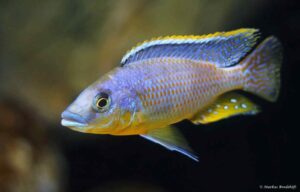
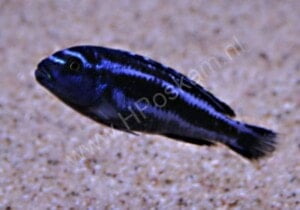
As for the coloration, the male Chindongo minutus has a striking blue or blue-purple coloration with dark vertical stripes running down the flank. The head is often darker, sometimes black, with light stripes between the eyes. The fins are usually dark with a light edge, and the anal fin may have some yellow or orange spots. Females are generally brown or beige in color , with a less pronounced pattern, which helps them to camouflage themselves in their surroundings.
Differences between males and females
The physical differences between male and female Chindongo minutus are quite pronounced. Males are larger and display a vibrant, bluish color, while females are smaller and have a more muted brown or beige hue. This sexual dimorphism plays a crucial role in their reproductive behaviors, as males use their bright coloration to attract females. Behaviorally, males tend to be territorial and may exhibit aggression, particularly during the breeding season, whereas females are generally less aggressive and focus more on caring for their young.
Behavior and Temperament
Chindongo minutus is a social and active fish that lives in groups, but they can also be territorial, especially the males. They are not shy and will often defend their territory against other fish of the same species. This behavior is typical of mbuna cichlids, which are known for their aggressive and competitive nature. In an aquarium, it is advisable to keep several females per male to reduce aggression and create a more harmonious environment. These fish are bottom dwellers and spend most of their time near rocks and hiding places, where they can hide and defend their territory.
Life expectancy
In the wild, Chindongo minutus typically has a life expectancy of around 4 to 5 years, which can vary based on environmental conditions and predation. However, in a well-maintained aquarium, where they receive proper care and nutrition, these fish can potentially live longer—up to 6 years or more. To maximize their lifespan, it is crucial to provide a suitable environment that includes ample hiding places and maintains optimal water quality.
Biotope
Natural Distribution
Chindongo minutus is native to Malawi, with specific populations found in the region around Nkhata Bay and Lions Cove on the western shores of Lake Malawi. This lake is located in southeastern Africa and is one of the largest and deepest lakes in the world.
Distribution
This species of fish is a lake dweller, primarily inhabiting Lake Malawi. The lake is renowned for its endemic cichlids, including the mbuna species, which have evolved to thrive in the rocky substrates of the lake. Chindongo minutus is often found in the shallow parts of the lake, usually at a depth of 2 to 10 meters, but they can also be found up to 25 meters deep.
Natural Habitat
The natural habitat of Chindongo minutus is characterized by rocky areas filled with an abundance of small to medium-sized rocks. These fish prefer regions with numerous hiding spots, allowing them to conceal themselves and defend their territory. The substrate primarily consists of a mix of rocks and sand, supporting a rich growth of algae that serves as a food source. Typically, there is little to no underwater vegetation, as the fish mainly feed on the algae found on the rocks.
Climate
Chindongo minutus inhabits a tropical climate characterized by warm temperatures. The lake’s size contributes to very stable water values.
Diet
Food in the Wild
Chindongo minutus is a herbivorous fish that mainly feeds on aufwuchs, which refers to the algae and microorganisms that accumulate on rocks and other surfaces in their natural habitat. These fish use their bicuspid teeth to scrape off small particles from the algae, enabling them to gather food that is often inaccessible to other species. Their diet includes diatoms, cyanobacteria, and various small invertebrates found within the algal growth.
In Lake Malawi, where these fish predominantly reside, they are typically found in the shallow areas of the lake, where they search for food among the rocks and utilize shelters to hide from predators. Their feeding habits are well-suited to the rocky environment, allowing them to gather food efficiently at an angle of 30 to 60 degrees relative to the substrate.
Food in the Aquarium
In an aquarium, Chindongo minutus can be fed a varied diet rich in plant components. It is important to provide food rich in algae, such as spirulina pellets or flakes, as this reflects their natural dietary needs. In addition, they can also be fed occasionally with other types of food, such as:
- Frozen food such as brine shrimp, cyclops and daphnia.
- Dry food specially formulated for herbivorous cichlids.
It is crucial to ensure that the Chindongo minutus diet provides enough variety to ensure their health and well-being. Regular feeding, with a focus on algae, will help support their natural behavior and feeding habits, contributing to their overall vitality in an aquarium environment.
The Aquarium
Aquarium size
To successfully keep Chindongo minutus, it is recommended to have an aquarium of at least 200 liters. This size provides ample space for the fish to swim and establish their territories. If you plan to keep multiple pairs, choosing a larger aquarium—preferably 300 liters or more—is advisable. A larger tank helps reduce aggression and promotes better social dynamics among the group. Additionally, if you wish to keep multiple species, a spacious aquarium is essential.
The Aquarium
To set up an aquarium for Chindongo minutus, it is essential to replicate its natural habitat. This involves incorporating plenty of rocks and hiding spots, as these fish enjoy hiding and establishing their territory. Creating rock formations is crucial for their comfort. A fine-grained sand substrate is ideal, as it resembles the natural bottom of Lake Malawi and encourages algae growth, which is an important part of their diet. While plants are not necessary, if you choose to include them, opt for hardy species that can tolerate the activity of these fish.
Water parameters
The ideal water parameters for Chindongo minutus in an aquarium are a pH level between 7.5 and 8.5, a temperature range of 22 °C to 26°C, and a general hardness (GH) of 12 to 16. Maintaining good water quality is crucial, as these fish are sensitive to changes in their environment.
Compatibility with Other Residents
Chindongo minutus can be kept with other mbuna cichlids, provided the species are clearly distinct in appearance to minimize hybridization and aggression. Suitable tankmates include Metriaclima, Labidochromis, and Pseudotropheus. It is important to ensure that the other species are also of a similar size and temperament to avoid conflict.
On the other hand, they should not be kept with aggressive or much larger species, such as Tropheops or Melanochromis, as these fish can increase stress levels and disrupt the social structure in the aquarium.
In summary, keeping Chindongo minutus requires a well-established aquarium with sufficient space, hiding places and the correct water parameters to create a healthy and harmonious environment for this fascinating cichlid.

Breeding aquarium and conditioning
Breeding Tank
Chindongo minutus can be bred in either a standard aquarium or a designated breeding tank. However, for the best results, it is recommended to use a specialized breeding tank, especially if you want to enhance breeding success and give the fry a good start. A suitable breeding tank should have a minimum capacity of 200 liters. This size allows enough space for the fish to establish their territories and helps minimize stress.
Water quality
Water quality in the breeding tank must be carefully managed. Ideal water parameters are a pH between 7.5 and 8.5, a temperature of 22 to 26 °C, and a hardness (GH) of 12 to 16. It is important to perform regular water changes to maintain water quality and remove harmful substances.
Lighting and Filtration
The lighting in the breeding tank should be bright, but not excessively so, to create a natural environment. A light cycle of approximately 10 to 12 hours per day is ideal. For filtration, it is recommended to use a biological filter, as this optimizes water quality. A biological filter helps maintain a stable environment for the fish and promotes the growth of beneficial bacteria that are essential for breaking down waste products.
Diet and Conditioning
For the conditioning of the fish it is important to give them a varied diet rich in vegetable components. Foods such as spirulina pellets, frozen food (such as artemia and daphnia), and blanched vegetables such as lettuce or zucchini can be offered. This helps the fish achieve optimal condition for breeding.
Breeding behavior
A good ratio for a breeding group is to keep one male with three to four females. This ensures that the male is not too aggressive towards a single female partner and that the females have enough space to hide and breed.
The Spawn
Colors during spawning
During courtship, male Chindongo minutus display their most vibrant colors. Their appearance becomes more intense, often featuring a bright blue or purple base adorned with distinct black stripes. This color transformation plays a vital role in their breeding ritual, as it attracts the attention of females and encourages them to participate in the spawning process. While females experience a less pronounced change in color, they too may show slightly brighter hues, particularly when in the presence of a male.
Courting Ritual
Courtship in Chindongo minutus is a visual and behavioral ritual. The male selects a suitable location for spawning, typically near a large rock or in a shallow hole he has excavated. During courtship, the male displays his most vibrant colors and employs various swimming movements to capture the female’s attention. He may spread his fins widely and swim in circles around the female, showcasing his territory and demonstrating his suitability as a mate.
Spawn location and Eggs
Chindongo minutus are mouthbrooders, meaning that the females incubate the eggs in their mouths after spawning. Spawning typically occurs in the early morning, when the fish are most active. The female lays the eggs in a shallow depression in the sand, which the male has prepared.
Number and Characteristics of Eggs
The number of eggs laid by a female typically ranges from 10 to 25 per clutch. These eggs are small and can be clear or light yellow in color. During the breeding process, the pair swims in circles around each other. The female lays an egg in the sand, and the male fertilizes it while turning. After fertilization, the female collects the eggs in her mouth.
After a few days, the eggs hatch, but the female does not release the young fish immediately. The fry continue to live off their yolk sac. Only 18 to 21 days after spawning, the female releases the young fish among the rocks. From that point onward, the young fish must fend for themselves.
Raising the fry
Parental Care
Parental care for Chindongo minutus is primarily the responsibility of the female. She holds the fry in her mouth to protect them. However, once the fry become free-swimming, they are no longer shielded by their mother. In a mixed aquarium with adult fish, the young Chindongo minutus can often become prey to the adults, which significantly reduces their chances of survival. While a few may survive, it is advisable to remove the female around day 17 after she lays the eggs and transfer her to a special rearing tank. This provides a safer environment for the fry to grow, away from potential threats. After the fry have been released, the mother can be placed back in the main aquarium.
First food
The first food for young fish should consist of small particles, such as infusoria or finely crushed spirulina flakes. It’s important to provide a diet rich in plant-based ingredients to align with their natural feeding habits. Young fish should be fed several times a day to ensure they receive enough nutrients for healthy growth.
Particularities
Morphological Characteristics
One of the most notable morphological features of Chindongo minutus is the presence of bicuspid teeth in the outer rows of both the upper and lower jaws (bicuspid teeth have two points, while tricuspid teeth have three). These bicuspid teeth are significantly larger than the tricuspid teeth in the inner rows, distinguishing *Chindongo minutus* from other cichlids in the region. Additionally, the fish has a relatively small mouth, which enables it to scrape algae off rocks—an essential part of its diet.
Behavior and Social Structure
Chindongo minutus exhibits interesting social behavior. Although they live in groups, they can be intolerant of conspecifics, especially when it comes to territory. This makes it important to provide sufficient hiding places and space in the aquarium to minimize conflict. Their aggressive behavior is particularly noticeable during the breeding season, when male fish defend their territories and intensify their colors to attract females.
Nutrition and Diet
Chindongo minutus primarily feeds on aufwuchs in their natural habitat. Aufwuchs refers to the algae and microorganisms that accumulate on rocks. These fish are specially adapted to scrape off this algae, allowing them to access food that many other species find difficult to reach. In an aquarium, they can be provided with a varied diet that includes spirulina pellets, frozen foods such as brine shrimp and cyclops, as well as vegetables like zucchini.
Life Cycle and Reproduction
The reproduction of Chindongo minutus is an intriguing process. The females are mouthbrooders, holding the eggs in their mouths until they hatch. This provides the eggs with extra protection from predation, which is crucial in an environment where adult fish can pose a threat to the young. The young are usually deposited in a safe environment, and the young are released after about 18 days, but they are no longer protected by the mother.
Habitat and Ecology
Chindongo minutus lives in a tropical climate and is adapted to the specific conditions of Lake Malawi. They can be found at depths of 2 to 10 meters, where they hide between rocks and defend their territory. Their habitat is rich in algae, which is essential for their diet and survival.
Conclusion
In summary, Chindongo minutus is a unique and interesting cichlid that has adapted to the specific conditions of Lake Malawi. Their morphological characteristics, social behavior, and feeding habits make them a fascinating species for both aquarists and researchers. With the right care and environment, they can be a valuable addition to any aquarium.
Video

Author
John de Lange
Copyright images
Mark Thomas – Marks Fiskenarie
Pete Barnes
Carsten Jensen Gissel – Facebook