

How I breed the Aphyosemion australe
Aphyosemion australe, commonly known as Lyretails, are plant spawners. They lay their eggs on floating mops or on the leaves of aquatic plants. Lyretails are non-annuals. They can live several years and their eggs do not have to go through a dry incubation period before they will hatch. In other words, you can just leave the fish in a tank with many plants and fry will appear regularly. However, if you want to have many fry, collect their eggs and incubate them separately.
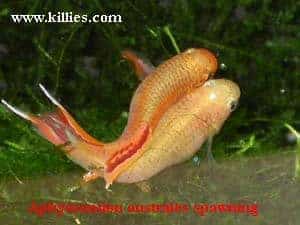
To breed the Lyretails, put a matured pair into a bare 20 litre plastic tank. Put in a few floating and sinking spawning mops. Use a sponge filter to keep the water clean.
Lyretails will lay many eggs if they are well conditioned. Feed them with live food for several days before putting them together.
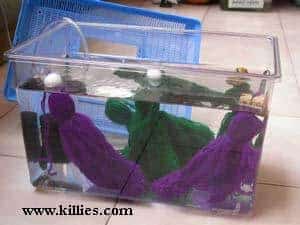
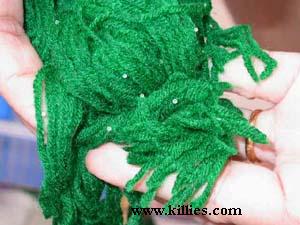
Check for eggs once a day everyday. Wash your hands before taking out the spawning mops from the tank. Gently squeeze out the water from the mops before looking for the eggs. If you are using a dark colour spawning mop, the eggs will stand out clearly if they are there.
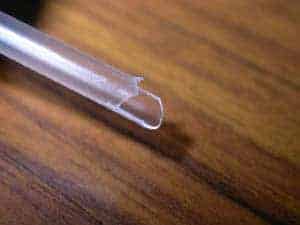
My wife who’s pretty smart fashioned an egg-picking tool by snipping off part of one end of a straw. It easier to pick eggs with this tool than to use your fingers. Lyretail’s eggs are a bit sticky and a few may stick to your hands when you handle the mops. So check your hands too when you have finished with the mops.
There are several ways the eggs can be incubated. One is to dry-incubate them on wet coconut fibre. The eggs should be kept apart to prevent fungus from spreading. Eggs which are fertilised should be clear when they are first laid. Discard eggs that are cloudy or white.
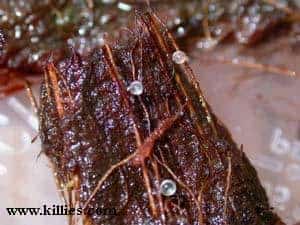
Keep the fibre in a plastic container and add some water. The eggs should be kept above the water-line. The fibre will absorb the water and keep the eggs moist.
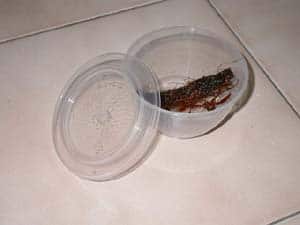
Keep the container covered and check for fungused eggs everyday. Remove fungused eggs as soon as you spot them or the fungus may spread through all the other eggs. Keep the container in a cool place. At indoor temperatures in Singapore, eggs will take about 10 days to hatch.
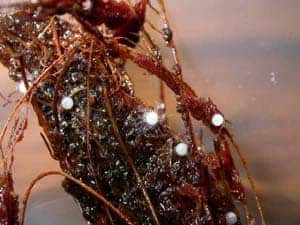
Eggs can also be dry-incubated on top of moist peat. As with the method using coconut fibre, space the eggs apart and check for fungused eggs everyday.
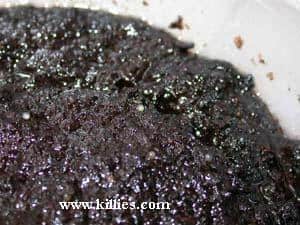
Eggs can also be incubated in water. Put the eggs into a plastic container with some water. To prevent fungus, add a few drops of diluted acriflavine into the water.
Acriflavine can be bought from Chinese medical stores. They are more commonly known as “yellow medicine”.

Eyes will appear on the eggs on the 3rd day. Eyed-up eggs are safe from fungus.

As with the method using coconut fibre, eggs dry-incubated on top of moist peat will eye up on the 3rd day.
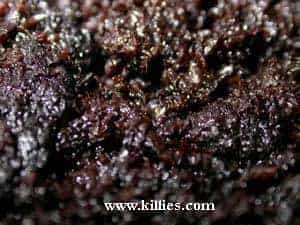
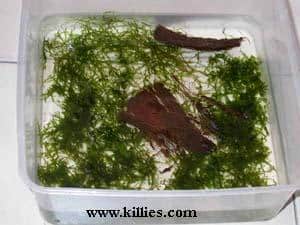
8 days after picking the eggs, put them into water. I always have “hatching trays” standing by. There’s always moss in the trays as they provide infusoria and serves as a “security blanket” for the fry.
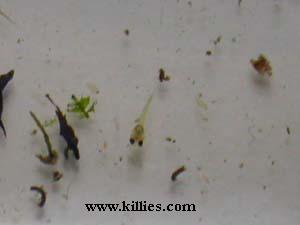
Lyretail fry are large enough to eat baby brine shrimp at birth. I raise them the same way as I do with the Nothobranchius.
Sometimes, for some strange reason, eggs which are clearly well-developed will refuse to hatch. In such cases, you can try force-hatching them.
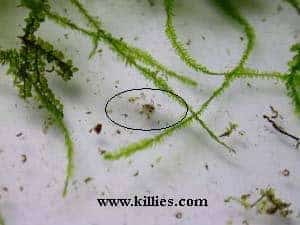
To force hatch eggs, use a turkey baster or eyedropper to transfer the eggs into a vial with some water. Take a deep breath and blow into the vial before closing the lid. Put the vial into your trousers pocket and go take a walk. Check the eggs every half an hour. Repeat the process until all the eggs hatch.
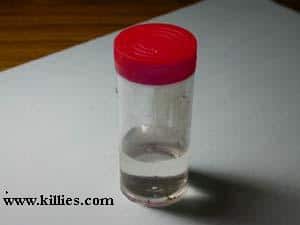
Exhaling air into the vial raises the concentration of CO2 inside the water; keeping the vial in your pocket raises the temperature; walking creates movement. Either one or a combination of these factors forces the eggs to hatch.
If they don’t work, try doing the “funky chicken”.

Ever since I became a hobbyist more than 30 years ago, I have often wondered about a particular group of fish. These fish, although often featured in books, are rarely available in the fish shops of Singapore. They were better known as “Egg-Laying Toothcarps” in the old days. The fish were very colourful and had an aura of mystery around them. People say they are the most beautiful of all tropical fishes and that their eggs can be sent across nations and still remain alive.
In November 2001, I received my first few bags of killifish eggs from friends living in the US of A. Since then, many more have arrived. Now I have a good collection of killifish and have managed to breed quite a few of them. They are indeed the most beautiful of all tropical fishes.
Everything they say about killifish is true and more……
Killies.com


