
Rio Paraná

Rio Paraná
The Rio Paraná is one of the most important rivers in South America and plays a crucial role in the ecology, economy, and culture of the region. In this description, we will discuss the length, origin, destination, major cities along the river, habitat, biodiversity, and fish species found in the Rio Paraná.
Length and Origin
The Rio Paraná is the second longest river in South America, after the Amazon. The river has a total length of approximately 4,880 kilometers. The Rio Paraná is formed by the confluence of the Rio Grande and the Rio Paranaíba in southern Brazil. From this point, the river flows southwest through Brazil, Paraguay, and Argentina before finally emptying into the Río de la Plata and the Atlantic Ocean.
Destination
The Rio Paraná flows into the Río de la Plata, an estuary that forms the border between Argentina and Uruguay. The Río de la Plata then flows into the Atlantic Ocean. This estuary is an important maritime hub and plays a crucial role in the region’s shipping and trade.
Major Cities Along the Rio Paraná
Several major cities of great economic and cultural importance are located along the Rio Paraná. Some of the most important cities are:
1. Rosario (Argentina): Rosario is one of Argentina’s largest cities and an important industrial and commercial center. The city is located on the western bank of the Rio Paraná and has a large port that is essential for the export of agricultural products.
2. Corrientes (Argentina): Corrientes is the capital of the province of Corrientes and is located on the eastern bank of the Rio Paraná. The city is known for its colonial architecture and cultural festivals.
3. **Asunción (Paraguay)**: Asunción is the capital and largest city of Paraguay. The city is located on the left bank of the Rio Paraguay, a tributary of the Rio Paraná. Asunción is the political, cultural, and economic center of Paraguay.
4. Posadas (Argentina): Posadas is the capital of the province of Misiones and is located on the western bank of the Rio Paraná. The city is an important trade and transport hub in the region.
Habitat and Biodiversity
The Paraná River has a diverse and rich habitat that supports a wide range of flora and fauna. The river flows through various ecosystems, including tropical and subtropical forests, wetlands, and savannas. This variety of habitats contributes to the region’s high biodiversity.
The wetlands of the Rio Paraná, such as the Iberá Wetlands in Argentina, are of particular ecological importance. These wetlands are one of the largest freshwater reserves in the world and are home to countless plant and animal species, including many endemic and endangered species.
Fish species in the Rio Paraná
The Rio Paraná is particularly rich in fish species. More than 350 different fish species have been identified in the river, making it one of the most biodiverse river systems in the world. Some of the most notable fish species are:
1. Dorado (Salminus brasiliensis): The dorado is a large predatory fish known for its strength and speed. It is a popular fish among sport fishermen.
2. Surubí (Pseudoplatystoma corruscans): The surubí is a large catfish found in the Rio Paraná. This fish is important for both commercial and sport fishing.
3. Pacú (Piaractus mesopotamicus): The pacú is a herbivorous fish related to the piranha. This fish is known for its strong jaws and is often caught for consumption.
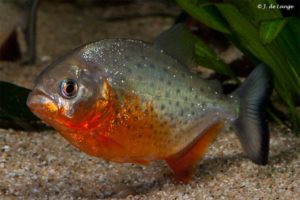
4. Piranha (Serrasalmus spp.): The piranha is a well-known predatory fish found in the Rio Paraná. Although they often have a bad reputation, piranhas play an important role in the ecosystem by regulating fish populations.
5. Armado (Pterodoras granulosus): The armado is a large catfish known for its spiny armor. This fish is an important prey for larger predatory fish and birds.
Conclusion
The Rio Paraná is one of the most impressive and ecologically important rivers in South America. With a length of almost 4,880 kilometers, the river flows through Brazil, Paraguay, and Argentina, eventually emptying into the Río de la Plata. Several large cities are located along the river, including Rosario, Corrientes, Asunción, and Posadas, all of which benefit from the river’s economic and ecological wealth.
The habitat and biodiversity of the Rio Paraná are exceptional, with a wide range of ecosystems supporting countless plant and animal species. The river is particularly rich in fish species, with more than 350 different species found in the river. These fish species play a crucial role in the ecosystem and are of great importance to both commercial and recreational fishing.
The Rio Paraná is living proof of the richness and diversity of nature in South America and deserves protection and conservation to ensure its ecological and economic value for future generations.
Author

Since I bought my first second-hand aquarium when I was twelve, I have always had one or more aquariums. I even converted a garage into a breeding room where I had 50 aquariums containing around 10,000 liters of water. At the moment, I have two aquariums: a 1,250-liter Tanganyika aquarium and a 250-liter community aquarium with plants. For the past 10 years, I have been working on this website as a writer and photographer.
Photo copyright
Below you will find the fish species we have added to our database:
Showing all 24 results











Showing all 24 results


