
Amazon
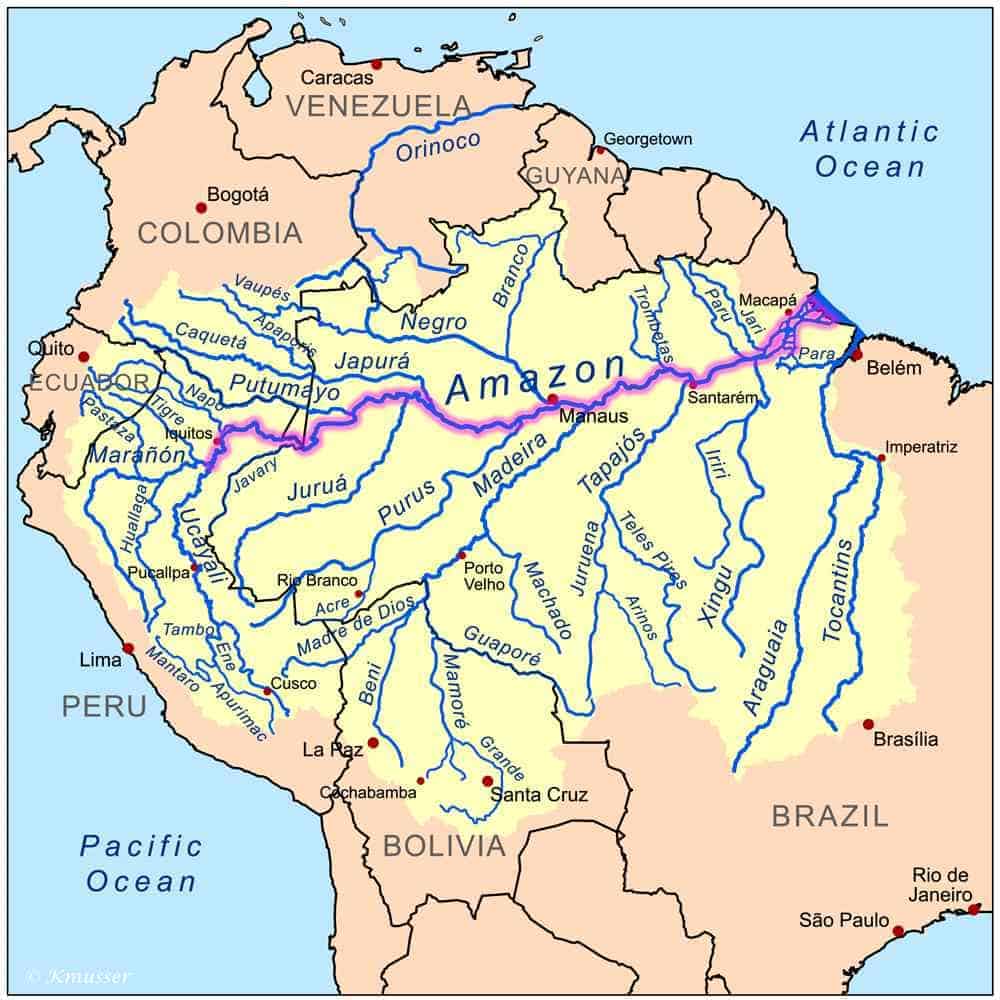
The Amazon
The name “Amazonas” was given by the Spanish explorer Francisco de Orellana, who explored the river in the 16th century. He named the river after the Amazon warriors of Greek mythology, after he was attacked by indigenous women warriors. The name “Amazonas” is derived from the Tupi word “amassona,” which means “boat destroyer.”
Length, Origin, and Destination
The Amazon is the second longest river in the world. In total, the Amazon is approximately 6,400 kilometers long. The river begins as a small stream in the Peruvian Andes, specifically at the Apurímac River, and flows eastward through South America to the Atlantic Ocean. The Amazon has a vast drainage basin that extends over approximately 7 million square kilometers, which covers almost 40% of South America.
Large Cities on the River
Some of the major cities along the Amazon include:
– Iquitos (Peru)
– Leticia (Colombia)
– Manaus (Brazil)
– Santarém (Brazil)
– Macapá (Brazil)
Habitat and Biodiversity
The Amazon is one of the most biodiverse ecosystems in the world. The river basin is home to over 3,000 species of freshwater fish, making it the largest concentration of freshwater species in the world. The river and its tributaries provide a variety of habitats, including floodplains, lakes, and canals, all of which contribute to the high biodiversity.
Rivers That Feed the Amazon
The Amazon has over 1,100 tributaries, the most important of which are the Rio Negro, Madeira, and Tapajós. These tributaries play a crucial role in feeding the Amazon and maintaining its vast water flow.
Destination
The Amazon flows into the Atlantic Ocean, where it discharges a huge amount of freshwater into the sea every day, reducing the salinity of the ocean more than 160 kilometers from the coast.
Important Fish Species for Aquariums
Some popular aquarium fish from the Amazon are:
– Neon Tetra (Paracheirodon innesi)
– Discus Fish (Symphysodon spp.)
– Corydoras Catfish (Corydoras spp.)
– Arowana (Osteoglossum bicirrhosum)
– Piranha (Pygocentrus nattereri)
Biotopes
Floodplains (Várzeas)
These areas are flooded annually and are rich in nutrients, resulting in high biodiversity. They are crucial for the reproduction of many species of fish and other aquatic organisms.
Terra Firme
These are elevated areas that do not flood regularly. They are covered with dense rainforests and are home to a large number of terrestrial species.
Black Waters (Igapó)
These biotopes are characterized by their dark, tannin-rich waters, which come from the decomposition of organic matter. They have a low pH and are poor in nutrients, but are home to unique fish species such as discus fish.
White Waters
These waters are rich in sediments and nutrients, coming from the Andes. They are turbid and have a higher pH and conductivity, which makes them suitable for a wide range of fish species.
Water parameters
The water parameters in the Amazon can vary greatly depending on the location and the season. Some measured values are:
– pH: Varies from 4.5 in black waters to 7.5 in white waters.
– Temperature: Average between 24°C and 30°C, depending on the depth and the season.
– Conductivity: Low in black waters (10-20 µS/cm) and higher in white waters (70-100 µS/cm).
– Oxygen content: Can vary from 3 mg/L in still waters to 7 mg/L in fast-flowing parts.
These variations in water values make the Amazon a complex and diverse ecosystem that supports a wide range of aquatic life forms.
Fish species
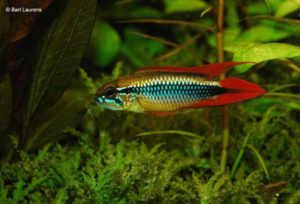
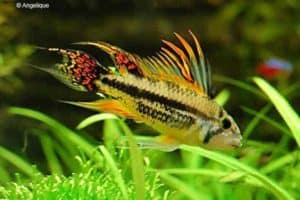
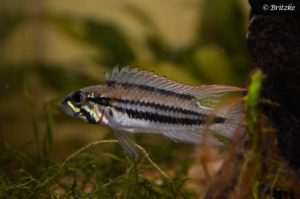
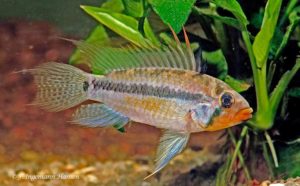
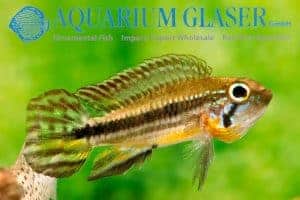
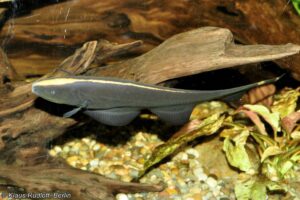
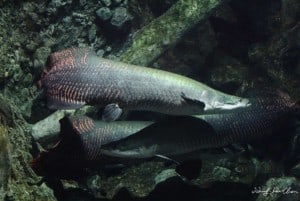
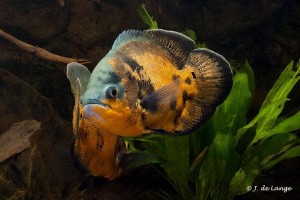
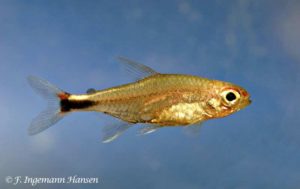
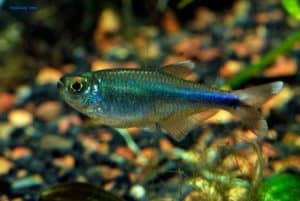
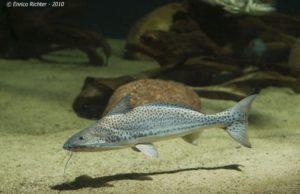
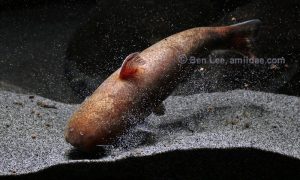
Below you will find the fish species that occur in the Amazon and are included in our database.
Author
John de Lange
Image copyright
Kmusser – CC BY-SA 3.0
Showing 1–90 of 107 results









































Showing 1–90 of 107 results


