Warmer aquariumwater has less oxigen, but that is not why fish pant at the surface. They are cold-blooded, their metabolism increases in warm water and they need a lot more oxygen for that!


Warmer aquariumwater has less oxigen, but that is not why fish pant at the surface. They are cold-blooded, their metabolism increases in warm water and they need a lot more oxygen for that!
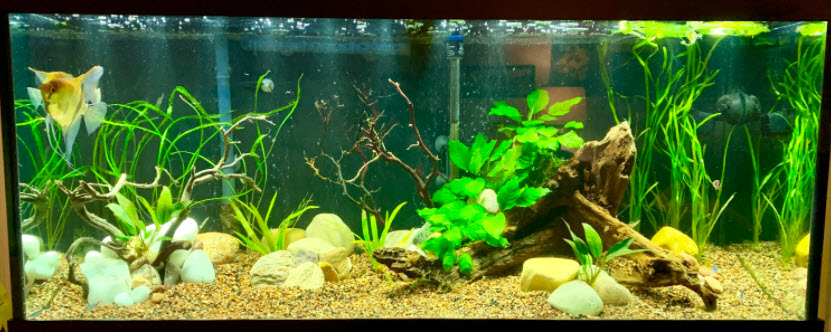
Skimmers are not recommended for a freshwater aquarium. For good aquarium health it needs aeration! A spray bar can be effective but only if it can create choppy waves.

Cleaning Aquarium Air Stones: Air stones last about six months before they become clogged. Some buy cheap replacements. It pays to clean the more expensive ones.

Breeding the Cardinal Tetra is quite possible. It just takes some preparation and knowledge to maintain the correct water values!

Bubble aeration is easy. Throw an air stone in an aquarium and you’ve got an aerator. But some, including myself, don’t like air stones. Both the bubbles themselves are noisy and the air pumps can be very noisy. And the wall or column of bubbles is obtrusive and unnatural in the aquarium.

Good aeration in an aquarium is not a result of good water surface “movement”. It is the result of “surface turbulence” or “bubble turbulence”. The term “turbulence” refers to chaotic rapid movement of water in several directions at once.

Aeration is creating a water/air interface in the aquarium where oxygen and carbon dioxide exchange can take place. Fish breathe water. They need to get their oxygen from air dissolved into the water. So, this exchange is important.

One of the five keys to any healthy aquarium is aeration. In an aquarium with even moderate amounts of fish, aeration is essential for healthy fish. The aeration not only keeps the fish healthy, it keeps the beneficial bacterial populations healthy.

One of the biggest myths, repeated over and over by a host of well-meaning but ill-informed commentators on social media, is that anaerobic or anoxic conditions can exist in an aquarium in the substrate if the substrate is deep enough.

Bacteria, fungi, water molds, wood, algae, mulm, protozoa, plants and, indirectly, fish can absorb nitrates, nitrites and ammonia from the water and produce proteins. This can reduce the nitrogen compounds by something called “assimilatory denitrification”. It is common and well-documented.


