


Makunaima pittieri – Diamond Tetra
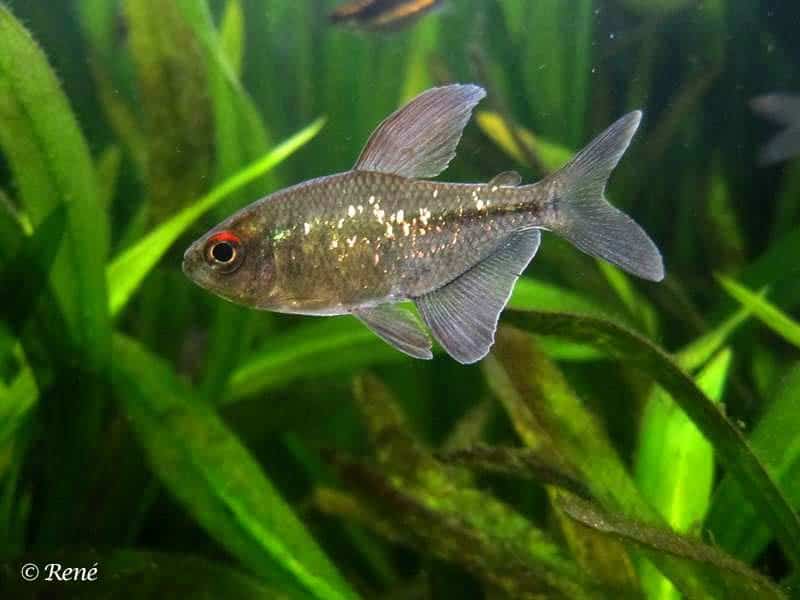
Makunaima pittieri was first described by Eigenmann in 1920. They are commonly known as Diamond Tetra.
The genus name Makunaima refers to a creator god from the mythology of various Amazonian tribes, who, according to legend, created animals and a large tree from which all food plants grew. The species name pittieri honors the American biologist H. Pittier, who was a Swiss-German geographer, linguist, ethnographer, and botanist who moved to Costa Rica.
Synonyms: Moenkhausia pittieri and Opisthanodus haerteli.
Description
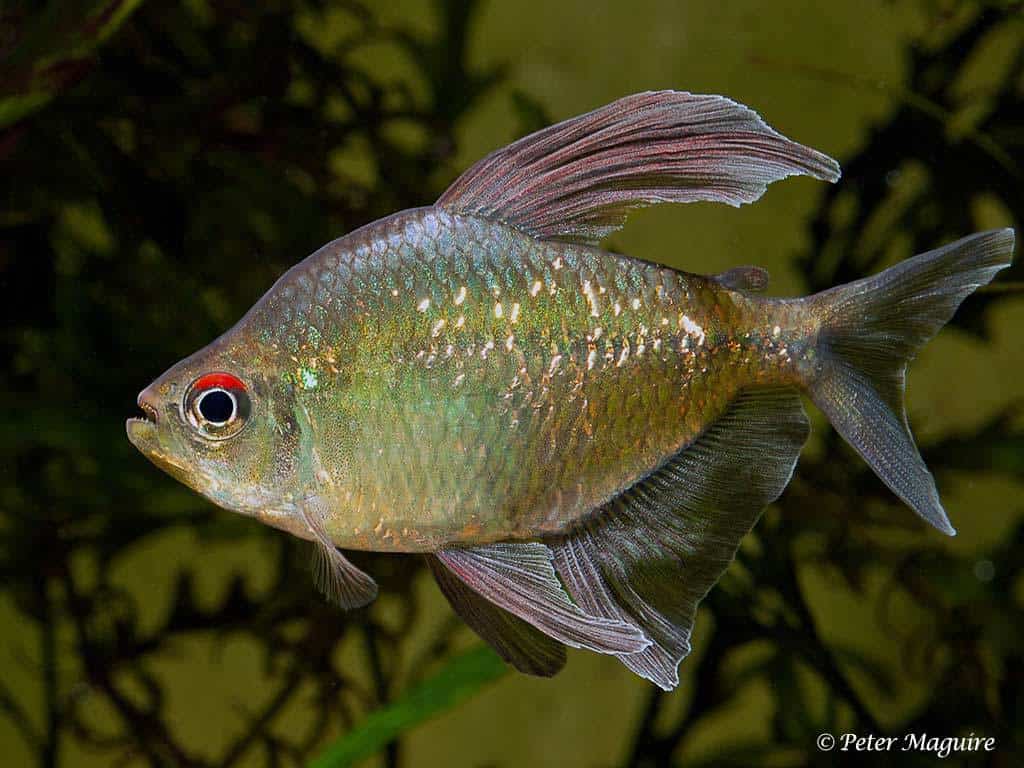
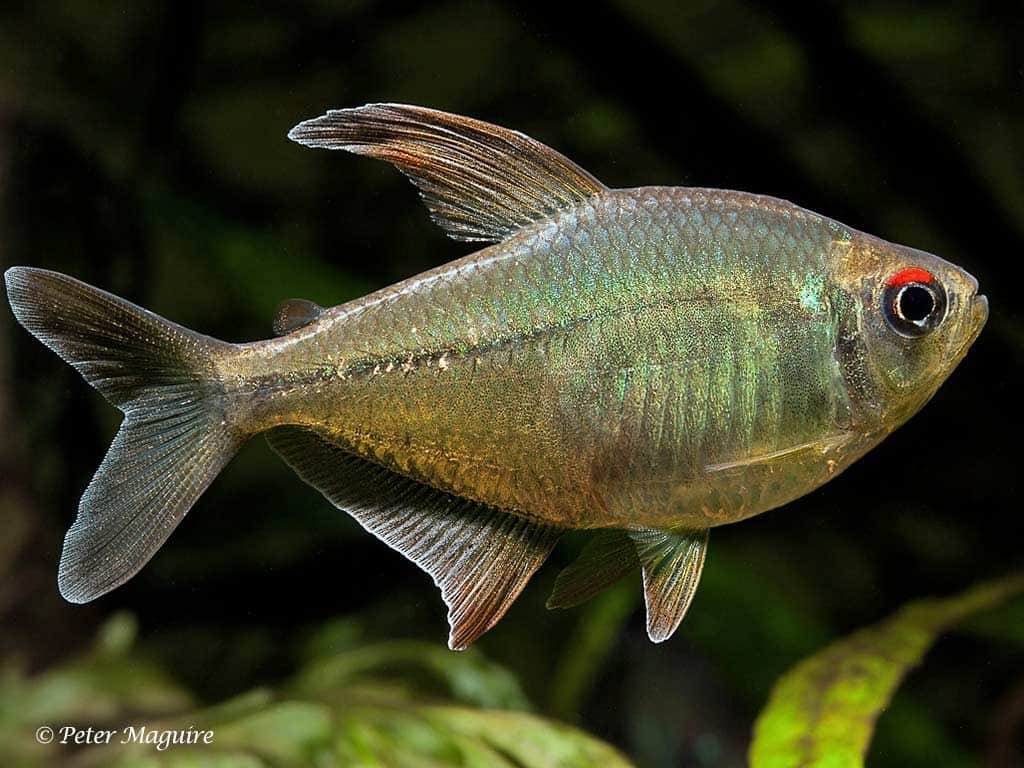
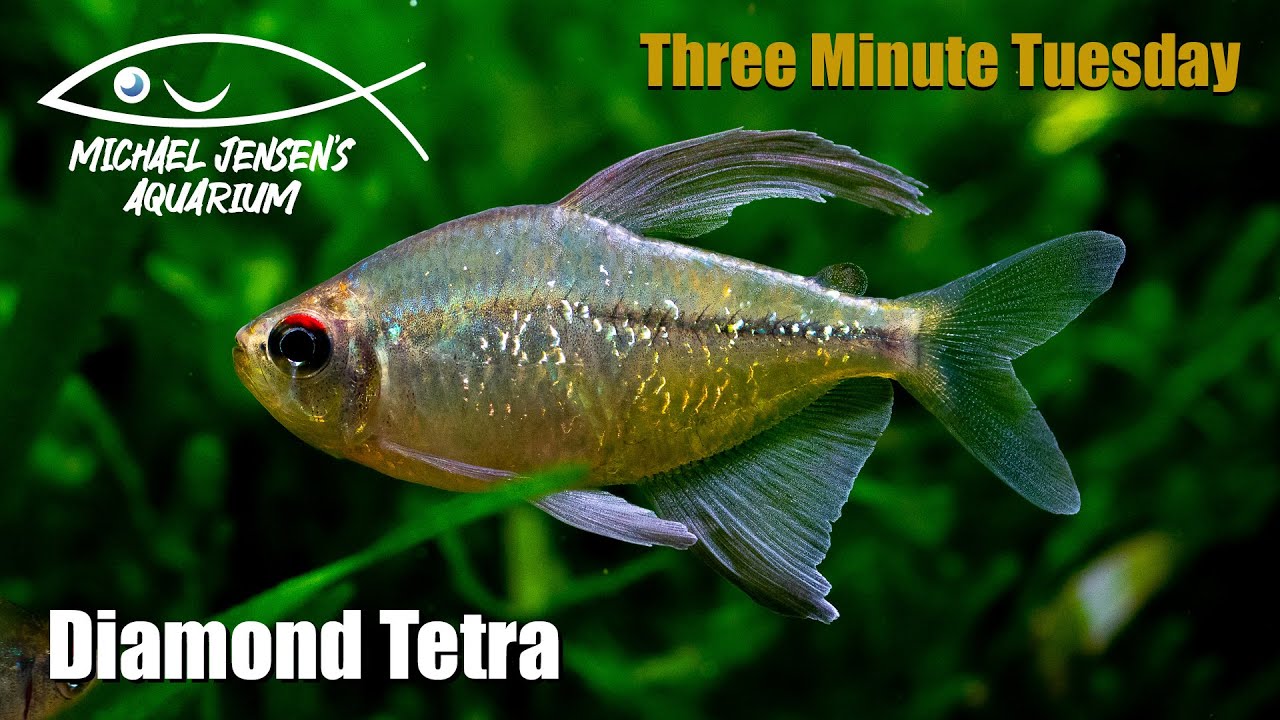
The Diamond Tetra is a fish that becomes more beautiful as it ages, with an increasing number of ‘diamonds’ on its body. These fish are naturally gray-white in color. As they age, the males develop longer fins than the females. The males’ fins become longer and grow out, with the tips bent backward, giving them an impressive appearance when swimming and showing off.
In the aquarium, they can reach a total length of about 8 inches (6 inches standard length). Juveniles are less conspicuous and may appear dull and colorless, but this changes as they mature. Their temperament is described as peaceful. They are not aggressive towards their own kind, although males may sometimes engage in minor fights with each other, damaging each other’s fins. They are also peaceful towards other fish, but should not be kept with overly aggressive species. The Diamond Tetra is mainly found in the middle and bottom of the aquarium.
Biotope
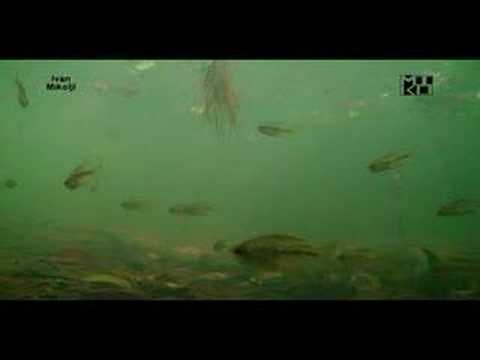
The Diamond Tetra is native to South America, specifically Venezuela. They are found in the coastal rivers of northern Venezuela, in the central part of the country, and in the so-called Caribbean basin. They also inhabit river systems that flow into Lake Valencia, located in the endorheic basin of this lake. Although they are found in coastal rivers, they never come close to the mouths, suggesting that they have a limited tolerance for salt water.
In the Valencia lake basin, the river systems where the Diamond Tetra is found show variations in their basic hydrographic characteristics. In general, the streams are small in size, supplemented by point sources of fresh water from urban and industrial discharges. Water levels fluctuate with dry and rainy periods, resulting in variable values.
Lake Valencia lies between two mountain ranges and is the second largest lake in Venezuela. Water quality is generally poor, mainly due to pollution from human agricultural and industrial activities. The lower basins where the species still occurs are under constant pressure from threats such as deforestation, habitat modification, and overfishing. These factors are leading to a continuous decline in habitat size, distribution area, habitat quality, number of subpopulations, and number of mature individuals.
Diet
Makunaima pittieri is carnivorous and prefers solid food. In their natural environment, they hunt insects, worms, and crustaceans. They are very opportunistic and like to scavenge for their food.
In the aquarium, they can be fed a varied diet. They enjoy eating mealworms, earthworms, beetles, and flies. They also appreciate dry food. They shoot to the water’s surface to catch their food, which indicates that in their natural habitat they fear danger from above, but at the same time are alert to food available on the surface.
When kept together with larger fish, they can benefit from the food left behind by these larger fish. This makes them a suitable species to keep in a larger community aquarium. However, it is always wise to keep the fish’s diet varied to ensure that they get all the nutrients they need.
Common mistakes when feeding Diamond Tetras include feeding them an unbalanced diet, which can lead to deficiencies, or overfeeding, which can cause water quality problems. It is important to adjust the amount of food to the size of the group and the size of the fish, and to only feed them what they can eat within a few minutes.

The Aquarium
For a group of Diamond Tetras, an aquarium of at least 80 centimeters is recommended. Although they do not swim excessively, they do need space to feel comfortable.
De inrichting van het aquarium is belangrijk voor het welzijn van de Diamantzalm. Zorg voor een goede beplanting, waarbij fijnbladige planten en mossoorten, zoals Javamos, zeer gewaardeerd worden. Deze bieden niet alleen schuilplaatsen, maar ook geschikte plekken voor de eiafzet. Een dichtbegroeid aquarium met voldoende schuilplaatsen helpt de vissen zich veilig te voelen en kan de kans op succesvolle kweek vergroten. Hoewel ze in het wild in stromende wateren leven, lijken ze in het aquarium geen sterke stroming nodig te hebben.
Water parameters
The recommended water values for the Diamond Salmon are:
- Temperature: Between 23°C and 26°C. A temperature around 25°C is considered sufficient. It is important to avoid extreme fluctuations, as prolonged exposure to minimum or maximum temperatures can shorten life expectancy.
- pH: Between 6.0 and 6.5
However, it has also been noted that the water values for this species are not extremely critical, as long as there are no major deviations.
Suitable and unsuitable tankmates
The Diamond Tetra is a peaceful fish and can be kept in a community aquarium. They can be combined well with other peaceful South American cichlids, provided they are not too aggressive. It is recommended to keep them in a school of at least 6, but a larger group of about 15 to 30 fish is even more recommended to stimulate their natural schooling behavior and enrich the spectacle in the aquarium. Males may engage in minor fights with each other, which can damage their fins, but this is usually not serious. However, they should not be kept with overly aggressive or very active fish species.
Sensitivity to certain diseases or substances
De vissen zijn redelijk gevoelig voor witte stip.

Breeding Aquarium and Conditioning
Breeding Diamond Tetras is possible, but it is considered difficult and frustrating, mainly because of the challenges involved in raising the young. Nevertheless, there are specific conditions that increase the chances of success.
Suitability for breeding in a community aquarium: Although young fry can sometimes go unnoticed in a community aquarium, it is advisable to use a separate breeding aquarium for controlled breeding. In a well-planted community aquarium with sufficient hiding places, such as moss, it is possible for young fish to appear. However, these young fish are extremely shy and hide well, making it difficult to determine whether there are any young fish at all.
Dimensions and setup of breeding tank: A separate aquarium is recommended for breeding. The ideal conditions for breeding are:
- Water values: Soft and acidic water is essential. The pH should be between 6.0 and 6.5, and the GH (general hardness) between 3 and 6. The temperature should be around 26°C.
- Inrichting: Fijnbladige beplanting is cruciaal, met name Javamos wordt zeer gewaardeerd omdat de vissen hier graag hun eitjes in afzetten. Het creëren van ruime schuilplaatsen met planten of turfpluis kan ook helpen. Sommige kwekers gebruiken een kale bak met alleen water, maar dit kan leiden tot veel stress bij de jongen en weinig overleving.
Conditioning parent fish: To condition parent animals for breeding, it is important to feed them well. A diet of live food, such as black mosquito larvae, is recommended. Separating a female for two weeks and feeding her well can result in the production of approximately 500 eggs.
The Spawn
Makunaima pittieri lays its eggs in soft, acidic water at a temperature of around 26°C. The fish are open spawners.
Although specific details about courtship behavior are not described in detail, it is mentioned that as male diamondback trout grow older, they develop longer fins and swim impressively around each other. This behavior may be part of courtship. No specific color changes during courtship are mentioned.
Spawning usually takes place in the morning, after the lights have been turned off. The eggs are laid among fine-leaved plants. This provides the fish with a suitable place to lay their eggs. A female that has been kept separate for two weeks and well fed can easily lay around 500 eggs.
It is important to remove the adult animals from the breeding tank immediately after they have laid their eggs, as they may otherwise eat their own eggs or young.
Raising the Young Fish
The Diamond Tetra fry hatch after about 3 days. Two days after hatching, they will swim freely.
The fry should be fed with fine dust food and infusoria. After that, you can switch to Artemia nauplii. It is important to use very fine food, as the mouths of the young fish are very small
During the first few days after releasing the fish, it is advisable to feed them small amounts several times a day. Regular, small water changes are also important to maintain water quality, especially since young fish are more sensitive to poor water conditions.
Survival tips
Diamond Tetra fry are extremely shy and hide very well. This makes it difficult to determine whether there are any fry at all, and also to monitor their welfare. Using a bare tank with only water can cause a lot of stress for the fry, resulting in few surviving. They can dart around the breeding tank at the slightest disturbance, which takes a lot of energy and can lead to starvation. Creating spacious hiding places with plants or peat moss can help reduce stress and increase the chances of survival. However, it can be difficult and frustrating to raise the young, as young animals are difficult to sell. Once they are mature, however, they can be sold quickly.

Conclusion
The Diamond Tetra is a fascinating fish that, despite a somewhat dull childhood, grows into a magnificent specimen with more and more “diamonds” on its body. They are peaceful and suitable for community aquariums, provided they are kept with calm tank mates. A school of at least 6, but preferably 15 to 30 fish, is recommended to stimulate their natural behavior and bring the aquarium to life. Care is not extremely demanding in terms of water values, but a stable aquarium with good planting and sufficient hiding places is important.
Breeding Diamond Tetras can be challenging, mainly due to the shyness of the fry and the need for soft, acidic water. However, with the right preparation and patience, it is possible to successfully breed these beautiful fish. Their diet is varied and they accept live, frozen, and dry food. With an aquarium of at least 80 centimeters and the right conditions, the diamond fish offers a rewarding experience for the aquarium enthusiast looking for a fish with unique development and a calm character.
Frequently asked questions – FAQ
Where does the Diamond Tetra come from?
The Diamond Tetra originally comes from Venezuela, South America.
What is the scientific name of the Diamond Tetra?
The scientific name of the Diamond Tetra is Makunaima pittieri. A well-known synonym is Moenkhausia pittieri.
How big does the Diamond Tetra get?
The Diamond Tetra can reach a total length of approximately 8 centimeters.
What are the ideal water values for the Diamond Tetra?
The recommended water values are a temperature around 23-26°C, a pH of 6.0-6.5, and a GH of 8-12. However, the species is not extremely critical as long as there are no major deviations.
How do I set up the aquarium for Diamond Tetras?
An aquarium measuring at least 80 cm is recommended. Ensure adequate planting, particularly with fine-leaved plants such as Java moss, which also serve as a place to lay eggs.
What do Diamond Tetra eat?
They are carnivorous and like to eat live food such as mosquito larvae, worms and insects, but they will also accept dry and frozen food.
Are Diamond Tetras suitable for a community aquarium?
Yes, they are peaceful and suitable for community aquariums, provided they are kept with calm tank mates. but preferably 15-30 fish, is recommended.
How do I breed Diamond Tetras?
Breeding requires soft, acidic water (pH 6.0-6.5, GH 3-6), a temperature around 26°C, and fine-leaved plants such as Java moss. Parents must be removed after spawning.
What is special about the Diamond Tetra?
As they grow older they, develop they more “diamonds” on their bodies and the fins of the males grow longer, which gives them a more impressivev appearance.
Why is the breeding of Diamond Tetra considered difficult?
The fry are extremely shy and hide themselves well, which makes them difficult to observe and breed them. They can quickly starve if they not well fed.
Video
Author

Since I bought my first second-hand aquarium when I was twelve, I have always had one or more aquariums. I even converted a garage into a breeding room where I had 50 aquariums containing around 10,000 liters of water. At the moment, I have two aquariums: a 1,250-liter Tanganyika aquarium and a 250-liter community aquarium with plants. For the past 10 years, I have been working on this website as a writer and photographer.
Copyright images
René
Peter Maguire