



Channa in general
Snakeheads are primitive predatory fish from the family Channidae, a group within the perch family. Their exact phylogenetic relationship is unknown, although recent research suggests that snakeheads are closely related to Labyrinth fish (Anabantoide) and Synbranchus eels (including spiny eels).
The genus Channa comprises 31 species that are widespread in Asia, from southeastern Iran and eastern Afghanistan eastward through Pakistan, India, southern Nepal, Bangladesh, Myanmar, Thailand, Laos, Malaysia, Sumatra, Indonesia, Vietnam, Korea, and China to parts of Siberia. In addition, three species of the related family Parachanna occur locally in parts of Africa.

The Channa varieties have large differences in size. The unofficial term “dwarf snakeheads” was coined by aquarium keepers to refer to a group of Channa species that do not grow larger than 25 cm: Channa bleheri, Channa cachua, Channa orientalis, Channa andrao. These species are also most suitable for keeping in an aquarium due to their limited size and relatively peaceful character. Most other species grow to a maximum of 30-90 centimeters. Five species (Channa argus, Channa barca, Channa marulius, Channa micropeltes and Channa striata) can even reach 100 centimeters or larger and can be considered monster fish that are hardly suitable for keeping in an aquarium.
Origin
Fossils dating back 50 million years indicate an origin in the southern Himalayas (India and eastern Pakistan). From 15 million years ago, with the expanding intertropical climate zone, they have spread further to parts of Europe, Africa, and a wider area of Asia.
Physical features
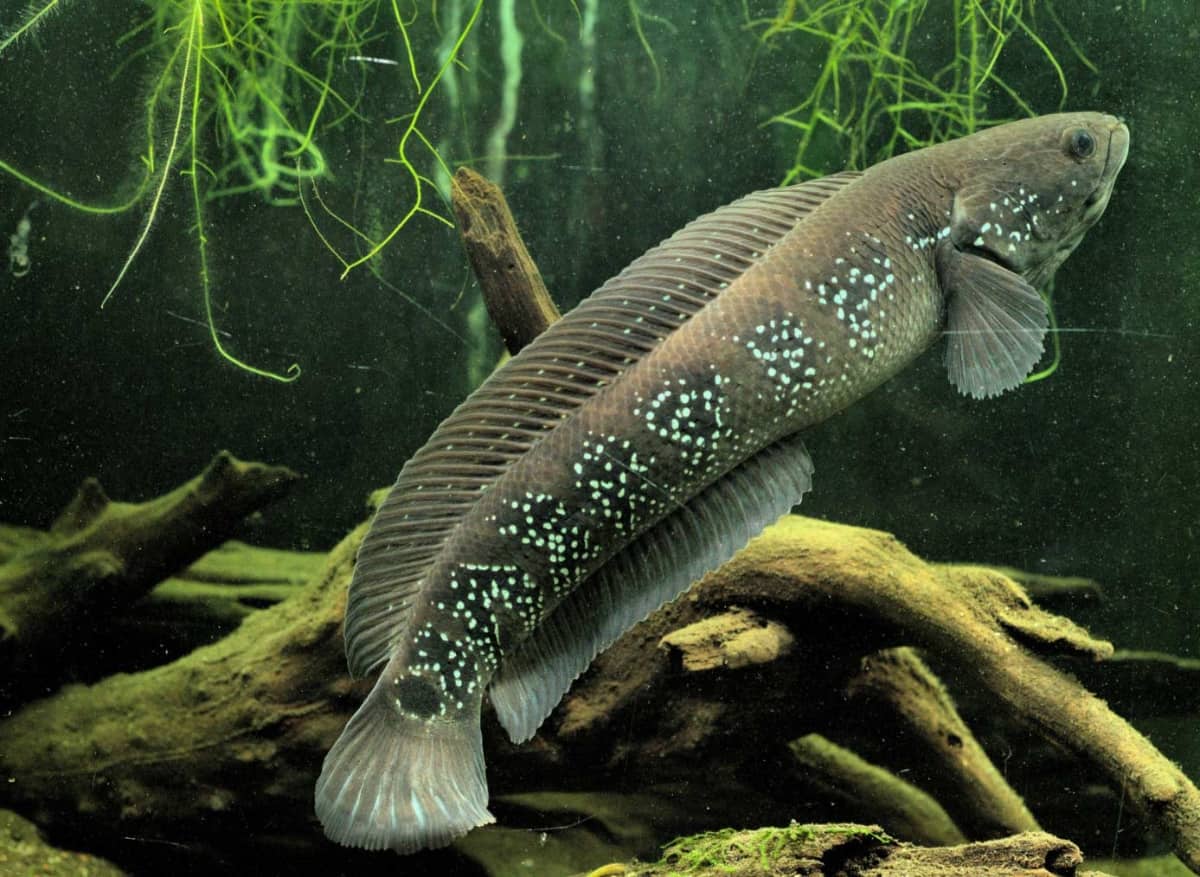
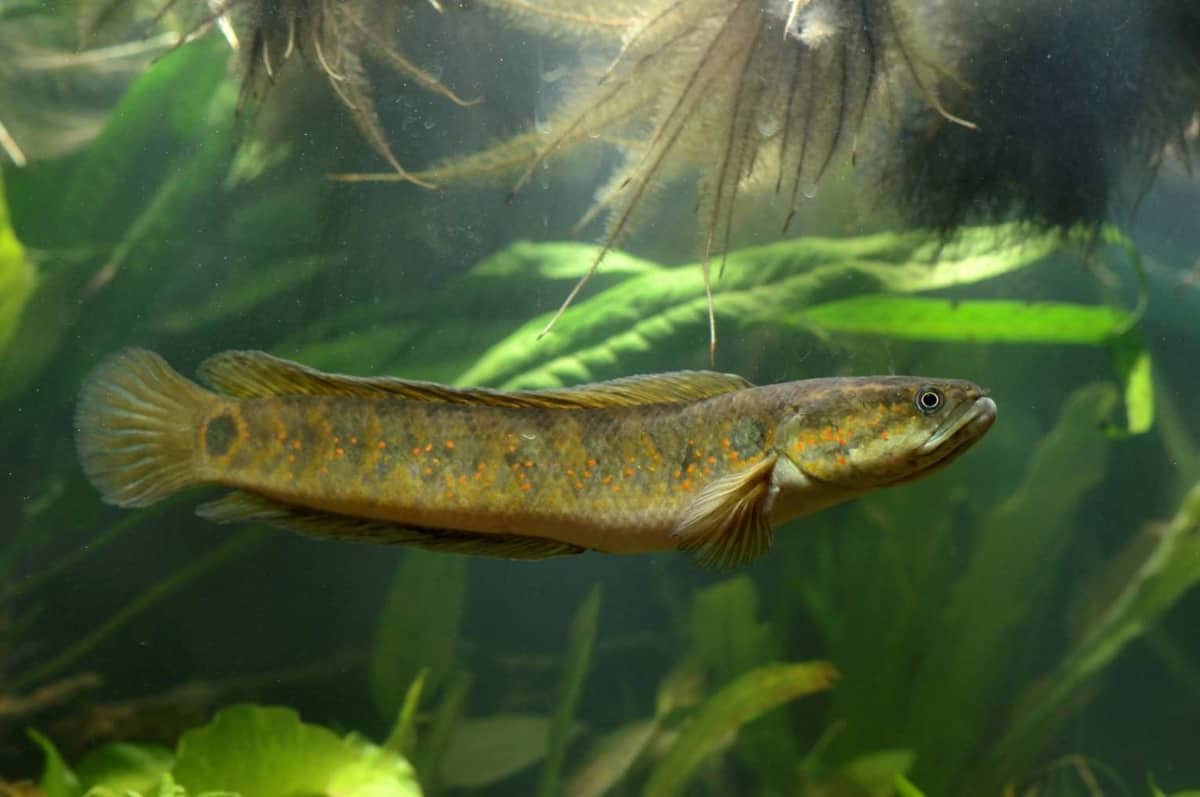
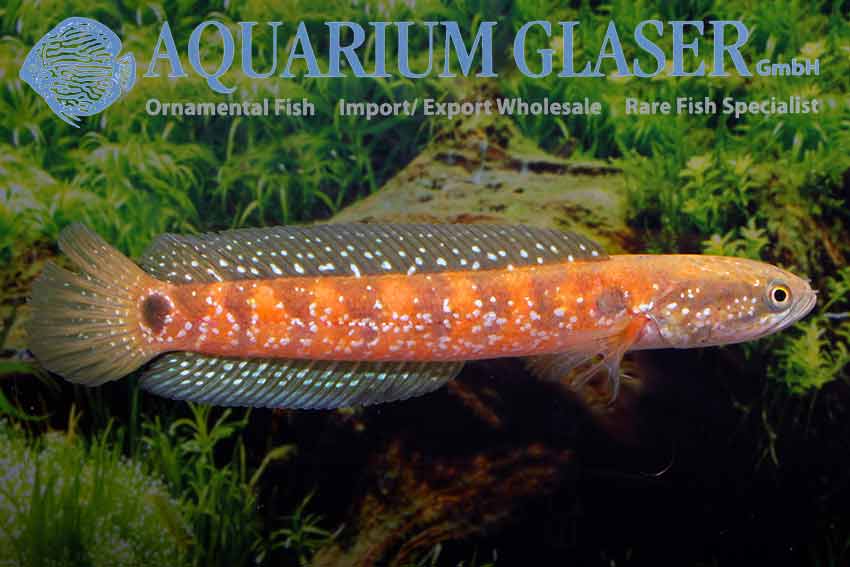
Channa have an elongated body and are distinguished by their long dorsal fins large mouths full of teeth. They earn their common name Snakehead because of their flattened shape and the scales on their heads that are reminiscent of the large epidermal scales on snakes.
Channa have gills to breathe water like most other fish. However, subadults and adults can also breathe air to supplement their demand for oxygen. In fact, snakehead fish mainly get oxygen from the air. Without air, they would drown. Unlike many other airbreathing fishes, Channa have a series of cavities in the rear section of their head. These cavities (suprabranchial chambers) are filled with tightly folded sheets. Due to the large contact surface of the sheets, oxygen can be absorbed into their blood. Unlike mammals, they lack a diaphragm and use water to exchange old air with fresh air each time they take a breath. Thus, their ability to breathe air when out of the water is limited. They appear to breathe air more frequently when swimming actively.
The genus Parachanna (from parts of Africa) is recognized as a separate genus because of a more primitive implementation of the breathing apparatus.
Snakeheads are known to migrate over short distances overland to find other water basins, using the ability to breathe air. When moving over land they curve their body in an S shape first, before launching themselves forward by a powerful stretch. In high humidity conditions, Channa are able to survive from 2 up to 4 days out of the water. When placed in direct sunlight, however, they desiccate and perish in minutes to several hours. Contrary to popular belief, snakehead fish don’t just leave the water. They especially know how to find their way back to the water when previously abundant areas dry up again. The only snakeheads that actively leave the water belong to the dwarf species (C. gachau and C. orientalis, C. asiatica, and C. amphibius). Even then there is a clear reason for leaving the water, such as escaping overpopulation.
Snakeheads can be found in a wide variety of waters and water conditions. They are found in tropical, subtropical and temperate regions. Snakehead fish are not dependent on the oxygen level in the water. Many (not all) species can also tolerate widely varying temperatures and water parameters for a period of time. However, they are very vulnerable to sudden changes in water parameters.
Commercial interest
Snakeheads are important consumption fish, especially in India, Southeast Asia, China and to a lesser extent Africa. It has been fished on a large scale for centuries. In recent decades, certain species (Channa maculata, Parachanna obscura, Channa striata, Channa argus) have been farmed for consumption. Sometimes they are used by fish farmers to reduce “pest fish” such as Tilapia.
In Southeast Asia, markets are often overrun with snakeheads. Fishermen and sellers take advantage of the fish’s ability to survive in just a thin film of water. This means that fresh fish can be offered throughout the day, a nice bonus in the not-always-hygienic conditions of a warm market.
Scientific research shows that snakeheads contain natural anti-inflammatories. In addition, it is known that they have a high content of omega-6 fatty acids, which have an analgesic effect. The fish oil also has positive effects on the prevention of cardiovascular disease and cancers.

“Fish out of hell”
Partly as a result of colonization, snakeheads have been deliberately introduced to other areas (Madagascar, Hawaii, Taiwan, Japan, Kazakhstan, Turkmenistan, Uzbekistan, and the Czech Republic) over the past hundred years. Today, snakeheads are considered a major threat to local ecosystems. Especially in the absence of natural enemies (such as humans), they are very invasive and destructive. Large species become sexually mature after 2-3 years, mate up to 2-5 times a year, and produce up to 15,000 eggs at a time. In addition, they are considered capable of migrating overland to other water systems. C. argus in particular is thought to be able to double its population within 15 months.
The discovery of a number of species of snakeheads in US waters has caused quite a stir. The media has been used to take unpopular measures to prevent the further spread of the species (such as draining or completely poisoning). Various media created a Piranha-esque image of a monster fish that eats an entire lake, then moves overland to the next lake, preying on dogs and children along the way. National Geographic came out with a slightly more fact-based documentary Invasion of the Snakeheads that talked about Fishzilla. Filmmakers in Hollywood found inspiration and support for 2 horror films in the hype.
Asian food markets (and the related need to store live fish in natural fish ponds) were blamed for the invasion. With the availability as food fish, the fish also became available to aquarium and pond keepers. Fish that grew too big for the tank often ended up in the local ecosystem. Since 2002, many US states have banned the possession of live snakeheads. In Europe, too, an import permit is required for C. argus, because this species is able to thrive in our colder waters.

Behavior
Snakehead fish are predatory fish that feed on plankton, insects and snails as youngsters. As they grow larger, the larger species switch to a menu consisting mainly of fish, frogs, crabs, shrimps, small aquatic mammals and waterfowl. Young specimens usually hunt in groups. When they reach sexual maturity, they isolate themselves to lead a solitary life or live in pairs. They then develop a higher degree of aggression towards conspecifics and often also towards other fish. Often a couple will not tolerate other fish in the limited space of an aquarium.
Snakeheads are not active swimmers. In addition to hunting, they actively move only to draw air from the surface. Usually, they swim in the middle water layer or rest on the bottom to strike from an ambush. A number of species, however, are pelagic and are more active swimmers. All snakeheads are capable of launching themselves forward from a standstill by briefly curving their muscular body and stretching it forcefully.
Brood care is an important behavioral trait for Snakeheads. All species violently guard and defend their eggs and young. The majority of species lay eggs that rise to the surface and are guarded there. A number of smaller species collect these eggs and store them in a burrow that may or may not have been dug. A number of species are mouthbrooders.
The snakehead is a popular – eccentric – fish among a specialist group of aquarium keepers. Snakeheads are elegant, powerful, alert, and calm fish, with a willful character. The mutual communication, hunting technique and brood care is fascinating. Some aquarium keepers specialize in keeping the largest species and have a pet-like experience. Some rare and variegated species (such as Channa barca) are among the most valuable aquarium fish on the market.
Snakeheads often have changing patterns and colors as they grow. With the exception of the dwarf species, the young of most species are much more beautifully marked and colored than the aging fish. With age, they usually get a duller ground color. Some aquarium keepers lose interest in them as they grow. It is therefore wise to do some research before purchasing.
As predators, snakeheads are by nature not a suitable choice for the average community aquarium. They are intolerant and usually soon the only fish. A special aquarium is required for keeping snakeheads. Aquarium keepers have different experiences when it comes to mixing snakeheads with other tankmates. Most species are best kept alone. Combining snakeheads with territorial or aggressive tankmates is not recommended. An intimidated snakehead fish hides, tries to escape and refuses to eat.

The extent to which other fish are tolerated in the small habitat of an aquarium depends very much on the species, but within that probably also on the individual specimen and the specific situation. There are a number of general experiences per group:
Dwarf species
Due to their small size and relatively mild temperament, most dwarf species pair well with robust, fast fish of a similar size. Provided these fish are not too territorial or aggressive. It should be taken into account that most dwarf snakeheads live in their natural environment in an eco climate zone with seasonal extremes in water temperature and water values. As a result, they cannot be kept at a tropical temperature all year round. A temperature reduction for at least one season per year is necessary to keep them healthy. Co-residents must also be able to cope with this.
Medium sized species
This group contains the most diversity in terms of behavior. Many of the larger species (between 30-60 cm) can be combined with relatively fast and robust fish of a similar size, for example, large cyprinids. General experience is that combining with other fish species works best when the snakehead fish are not yet too big and when the other fish have already settled. Newly introduced fish are often killed immediately. It varies greatly by species and experience. Often the tolerance to other fish is temporary. When a pair of snakeheads is formed, the co-inhabitants (also conspecifics) are usually chased and killed.

Large species (60 – 130 cm)
These snakeheads themselves require an amount of space that most private aquariums are unlikely to be able to provide. Extremely large private aquariums are usually just big enough to hold one fish or a couple. In general, the same applies as with the medium varieties. Fish that grow with them from an early age are often tolerated. Newly introduced fellow residents are often killed immediately.
A number of large species, such as C. argus and C. micropeltes, are important food fish. They are considered highly invasive and destructive to the local ecosystem outside their natural habitat (see also the documentary Invasion of the Snakeheads). After the fish were sighted in several places in the US, import bans and a ban on owning a live specimen are in effect in most states within the US.
Channa asiatica – Chinese Snakehead
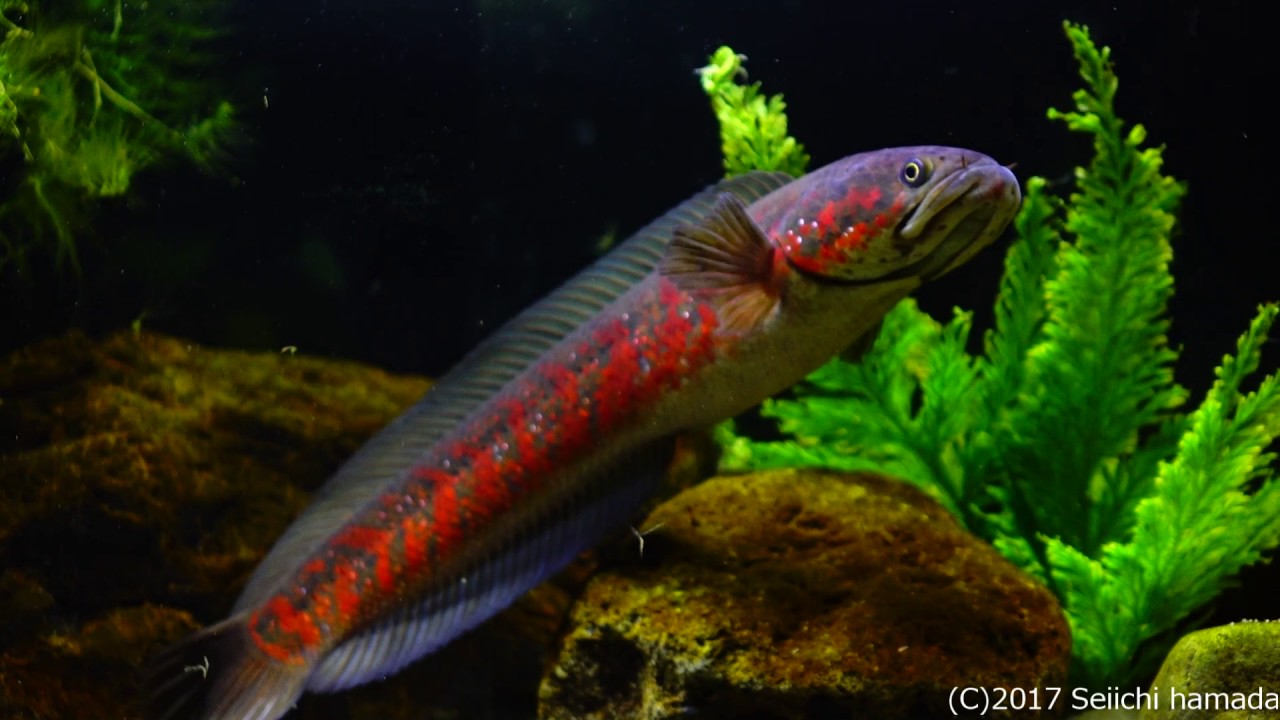
With a maximum length of 35 cm, Channa asiatica is a relatively small Snakehead. The species occurs in central and southern China (the Yangtze as the northern border area) and in the Sông Cái river in northern Vietnam. Furthermore, the species is present on the island of Hainan and Hong Kong. In addition, the species has been introduced to Taiwan and a number of islands belonging to Japan.
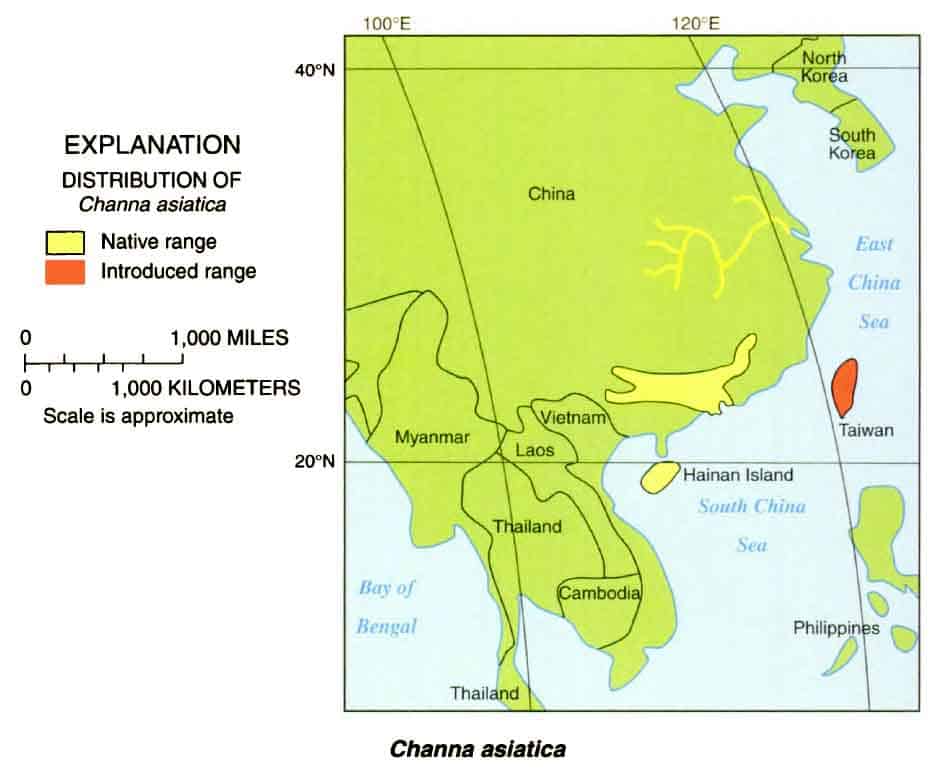
The habitat has a tropical monsoon rainforest climate. Characteristics are heavy rainfall, high humidity, and warm summer temperatures. The water temperature drops below 19 degrees Celsius in winter and rises between 22-28 degrees Celsius in summer (preferably keep it lower than this maximum). If it is kept at a higher temperature for too long, (fatal) bacterial infections often occur in the long term.
Channa asiatica is a mouthbrooder. The difference between males and females is hard to see. Females grow more slowly than males.

It is best to keep this species as a couple or solitary. To form a couple, as with almost all snakehead fish, it is best to purchase a group of young fish. When a couple has been formed, the other fish must be caught (otherwise they will be killed). However, keeping a group of this species requires a very large aquarium, lots of hiding places and luck. Experience with this species is that they are already intolerant of conspecifics from a young age and that they can cause great damage to each other in confrontations. Only when a couple has been formed do the confrontations between those 2 individuals stop, usually a very close couple is created. However, there are known cases where aggressiveness occurs after mating and one of them is killed. In an aquarium it is always wise to have a separation ready in case things go wrong.
Experiences with Channa asiatica in combination with other fish species vary. Sometimes it works, but in most cases the outcome is that keeping with other fish is not a long-term success and that larger co-inhabitants also end up skinned or in pieces.
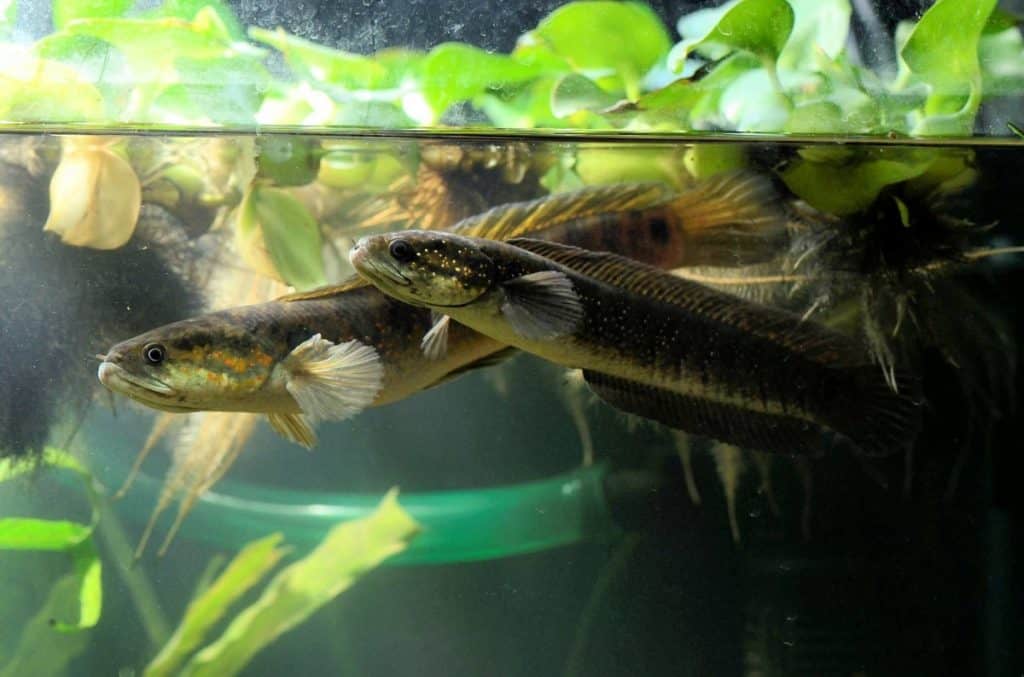
Channa Asiatica is, compared to other snakeheads , a fairly active swimming species.
The aquarium
An aquarium with densely planted areas, open swimming areas, and plenty of hiding places. Floating plants contribute to the fish’s comfort. Some darker spots are appreciated. Make sure that it is possible for them to get air from the surface, otherwise, they will suffocate. Close the aquarium tightly. They manage to escape from the aquarium through the smallest hole. Make sure that the aquarium temperature is lowered to 15-20 degrees Celsius during a season. In the colder period, less food is required and the water level can drop slightly. It is also possible to reverse the summer and winter seasons by keeping Channa Asiatica in the outdoor pond during the summer months.
Snakehead fish can live in water of very different composition. However, they are poorly resistant to sudden changes. Changea small amount of water in one go.
Any cohabitants must be able to withstand the required temperature reduction in the winter.

Diet
The Chinese Snakehead is a carnivore. All common fish food is eaten, including frozen. They will not feed on dry food like flakes or granules.
Breeding Channa asiatica – Chines Snakehead
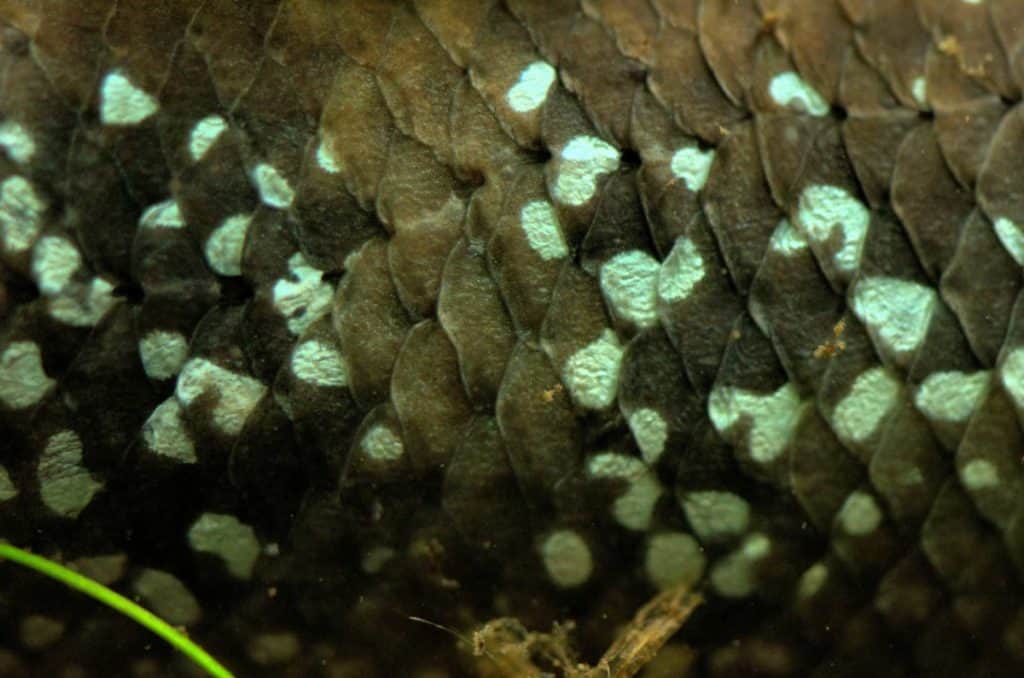
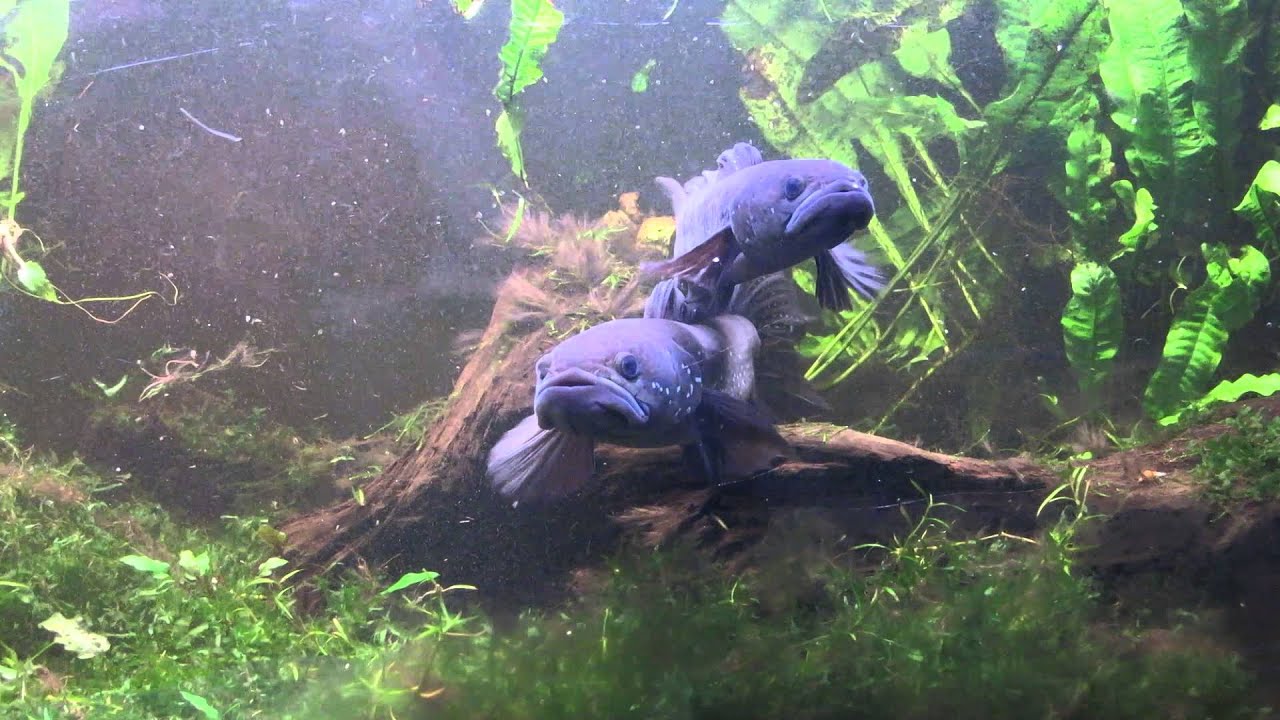
Experience is that a well-fed couple from 18 cm in length breeds at least once a year. Normally this can take place every 6-8 days in the aquarium. Mating usually takes place at night. Usually, this happens at a water temperature of around 18 degrees Celsius. Famales then get a paler base color with a pink glow. The dark brown stripes and silver markings darken. Males become darker in color.
The eggs float to the surface, where they are guarded by both parents. Depending on the temperature, the young hatch between 24-23 hours. They are then between 6-7 mm long and hunt in the same way as the parents. They eat brine shrimp larvae and daphnia directly. After 1 or 2 weeks you can switch to mosquito larvae.
If the intention is to keep as many youngsters as possible, it is important to sort them weekly according to size. The young are small cannibals, eating their own siblings.
Video

Author
Patrick de Pijper
Copyright images
Tea Shyi Kai: https://instagram.com/shyikai_photography/ en https://www.flickr.com/photos/78795430@N08
Hung Jou Chen
AquariumGlaser.de