
Ceratopteris thalictroides – Water Sprite
The scientific name of this plant is Ceratopteris thalictroides. Carl Linnaeus initially described the species, although Adolphe-Théodore Brongniart formalized the current naming. The Dutch name is Fine Oak Leaf Fern, also known as Water Sprite, Indian Water Fern, Oriental Water Fern, and Water Horn Fern. The plant belongs to the family Pteridaceae; its common name is Water Sprite.
The genus name Ceratopteris is derived from the Greek words “keras” (horn) and”pteris” (fern), a reference to the horn-shaped, fertile leaves. The species name thalictroides means ” resembling Thalictrum “, a reference to its resemblance to plants in the genus Thalictrum.
Synonyms: Acrostichum thalictroides, Ceratopteris froesii, Ceratopteris gaudichaudii, Ceratopteris siliquosa.
Description
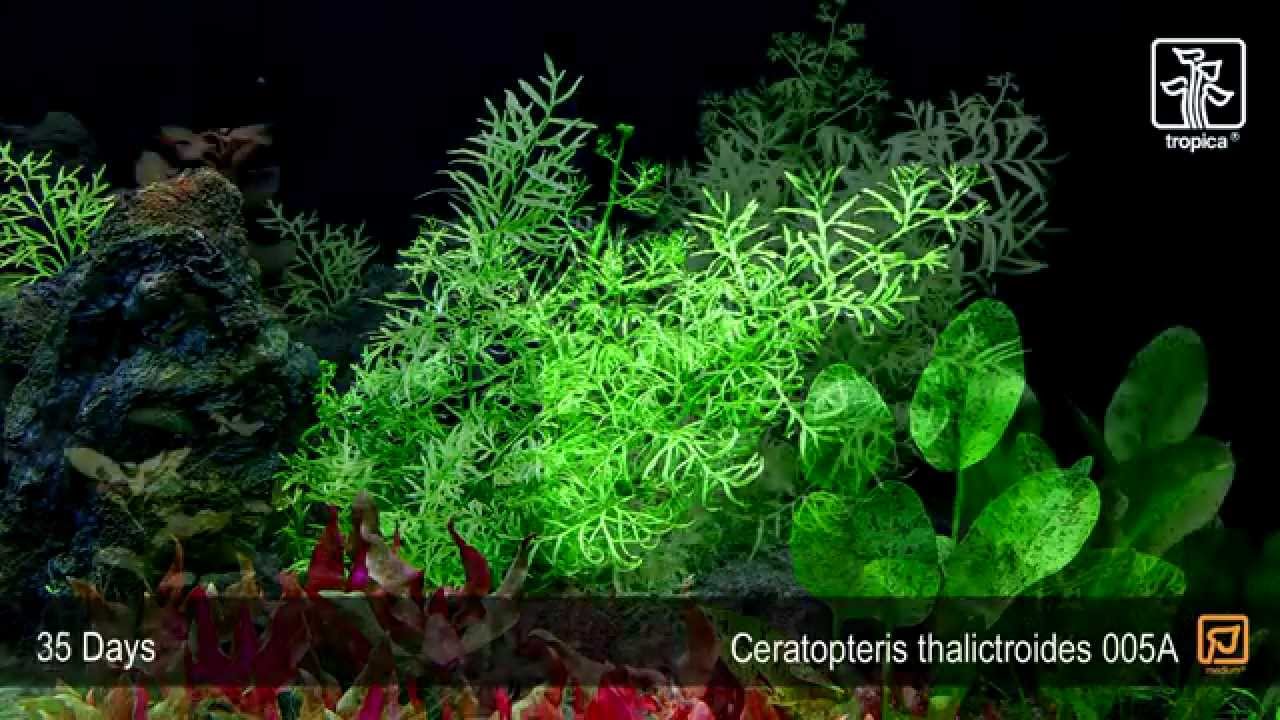
Water Sprite is an impressive fern that can vary in appearance based on its growing conditions, whether submerged or emersed. The leaves are typically light green, but may become slightly darker under certain circumstances. They do not have any distinct patterns or markings.
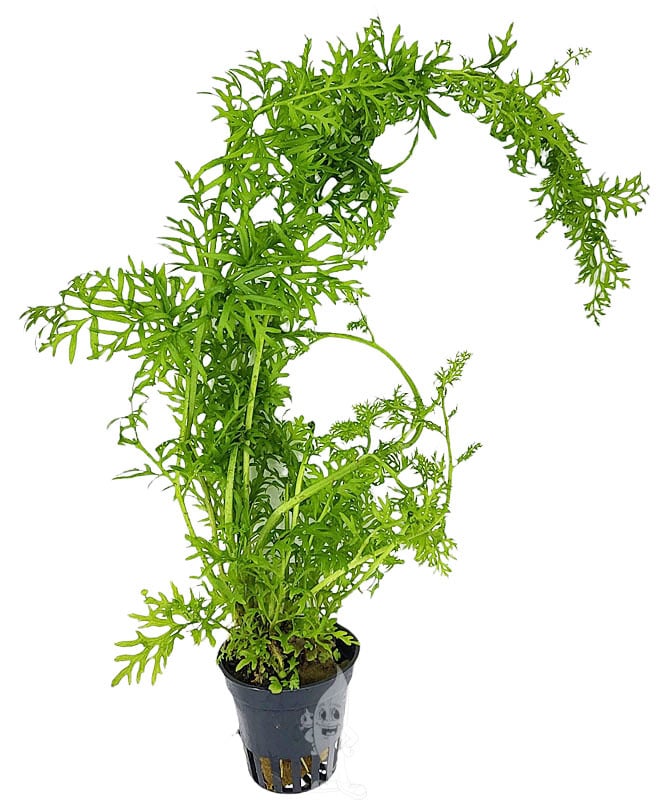
Leaf shape: Leaf shape is highly dependent on whether the plant is growing submerged (submersed, in an aquarium) or above water (emersed, in a pond or swamp). Underwater, the leaves are finely divided, almost needle-like and pinnate, creating a delicate and airy effect. Above water the leaves are wider, more pinnate and less finely divided.
Height: The maximum height of the plant varies considerably, depending on growing conditions and available space. Underwater plants generally remain smaller, up to about 30 cm, while above-water growth can lead to 50 cm or more.
Flowers: Ceratopteris thalictroides is a fern and does not form flowers. Propagation is through spores and offshoots (plantlets growing on the leaves ).
Biotope
In nature, Ceratopteris thalictroides is found in tropical and subtropical regions around the world. The plant occurs naturally in Asia, Africa, and parts of the Americas. The specific locations within these countries vary, but the plant prefers stagnant or slow-flowing water. The plant grows in various water types, including swamps, swamp forests, ponds, and rice fields.
The soil/substrate usually consists of muddy material, often rich in organic matter.
The Aquarium
Ceratopteris thalictroides thrives best in soft to moderately hard water with a pH between 5 and 8 and a temperature between 18 and 30°C. The plant absorbs most of its nutrients from the water, but a nutrient-rich substrate can promote growth. The plant grows both with and without CO2 addition, but CO2 significantly accelerates growth. Medium to strong light is ideal, about 8-10 hours per day.
This is a versatile plant that can be placed in an aquarium in a variety of ways:
- Background: Because of its rapid growth and potential to grow tall (up to 50 cm or more), the background is a suitable spot. This creates a natural, lush background.
- Middle to background: Depending on the size of the aquarium and desired aquascaping, the plant can also be placed in the middle or background.
- Floating: Ceratopteris thalictroides can also be kept floating. This is especially useful in the start-up phase of an aquarium to control algae, or if you want to create a specific effect. The plant will then grow long roots down.
The exact placement depends on the preferences of the aquarist and the overall layout of the aquarium. It is important to remember that the plant grows quickly and needs adequate space. It is advisable not to plant the plant too deep in the substrate so that the growth core (the heart of the plant) remains above the soil to prevent rotting.
Pond: Ceratopteris thalictroides can be placed in different ways in a pond. The plant can be planted fully submerged in the substrate (not too deep; the growth core should remain above the bottom ) or at the edge of the pond, partially in the water and partially above water. The depth of the substrate and the exact placement depend on the specific conditions of the pond (water depth, light, etc.). The plant can also be kept floating.
Propagation
Ceratopteris thalictroides propagates in two efficient ways:
- Via Plantlets (Offshoots): The plant produces small, fully developed plantlets along the edges of the leaves, especially on older leaves. These plantlets develop roots and can easily detach from the mother plant. Once they are large enough, they drop off and take root in the substrate or float on the surface of the water, where they continue to grow into mature plants. It is also possible to carefully remove these plantlets and plant them separately to speed up propagation.
- Via Spores: Like all ferns, Ceratopteris thalictroides produces spores. These spores are in small, brown structures on the underside of the leaves (the fertile leaves). Under the right conditions (humidity, temperature, light) these spores can germinate and grow into new plants. However, this method is less practical for aquarium keepers, because it requires more time and specific conditions.
Plant formation is the most common and simplest method of propagation in an aquarium environment. It is a natural and efficient way to obtain new plants quickly.
Particularities
Several interesting details about Ceratopteris thalictroides that add to the previously described aspects:
- Variety of forms: The plant exhibits considerable variation in leaf shape, both within and between populations. Aquarists often distinguish variants with coarser or finer leaves, sometimes referred to as different species (such as Ceratopteris cornuta), although taxonomic classification is still under debate among botanists.
- Amphibious nature: The plant is amphibious, which means it can grow both submerged (submersed) and above water (emersed) , resulting in a significant change in leaf shape. This adaptability makes it suitable for a variety of aquatic environments.
- Rapid growth and algal regulation: The rapid growth of Ceratopteris thalictroides is an important feature. The plant absorbs large amounts of nutrients from the water, which helps prevent algal blooms, especially in new aquariums. This makes it a suitable “starter plant.”
- Use as food and medicine: In some parts of Asia, the upper leaves of the plant are eaten as a vegetable. The plant also has traditional medicinal uses.
- Seasonality (in nature ): In some areas the plant exhibits some degree of seasonality, with maximum growth and spore production during the dry season.
- Cryptic species: Recent research suggests that Ceratopteris thalictroides actually consists of multiple cryptic species, which are difficult to distinguish from each other based on morphological characteristics.
Conclusion
Ceratopteris thalictroides, Water Sprite is a relatively simple and rewarding aquarium plant, even for beginners. Its rapid growth and production of small plants make propagation easy. It is recommended to provide sufficient light (8-10 hours per day) and use a nutrient-rich substrate for optimal growth, although the plant also thrives without CO2. The plant is an excellent choice for controlling algae in new aquariums
A notable feature is its amphibious nature and associated variation in leaf shape depending on growing conditions (submerged or above water). The plantlets growing on the leaves are an unusual and convenient method of propagation. The plant is also interesting because of its traditional use as food and medicine in some parts of Asia.
Video
Author
John de Lange
Copyright images
Frequently asked questions / FAQ
How do you propagate Water Sprite?
Water Sprite reproduces via spores and by forming adventitious plants on older leaves. In aquariums, just let the small plants take root; once they are ready, you can carefully detach them and replant them elsewhere.